
Coronavirus: Shanghai posts falling Covid-19 infections, symptomatic cases and death toll as city takes another tentative step towards recovery
- New Covid-19 infections fell for the 19th straight day, dropping 2.6 per cent to 1,449 cases in the past 24 hours
- Symptomatic cases shrank by 36.8 per cent to 144 while five patients died
Shanghai’s Covid-19 infections, symptomatic cases and fatalities declined, in another sign that its drastic citywide lockdown and innumerable mass tests since April 1 were slowly taking the city towards recovery from the current outbreak.
New Covid-19 infections fell for the 19th straight day, dropping 2.6 per cent to 1,449 cases in the past 24 hours, according to data released on Thursday. Symptomatic cases shrank by 36.8 per cent to 144 while five patients died, compared with seven deaths a day earlier. It was the 12th time since April 27 that all three counts declined.
“The outbreak is showing signs of ebbing, and it is a positive trend,” Shanghai’s health commission deputy director Zhao Dandan said during a press briefing.
The declining infection numbers led to renewed calls by residents and businesses for Shanghai’s authorities to relax some of the lockdown and standstill orders around the city. Supply chains have been strained to breaking point by a halt in the production of vital parts in China’s commercial hub.
Up to 614,000 people in the city of 25 million residents have caught Covid-19 since March 1, most of them asymptomatic. Its cumulative death toll stood at 565, or 0.09 per cent of infections.
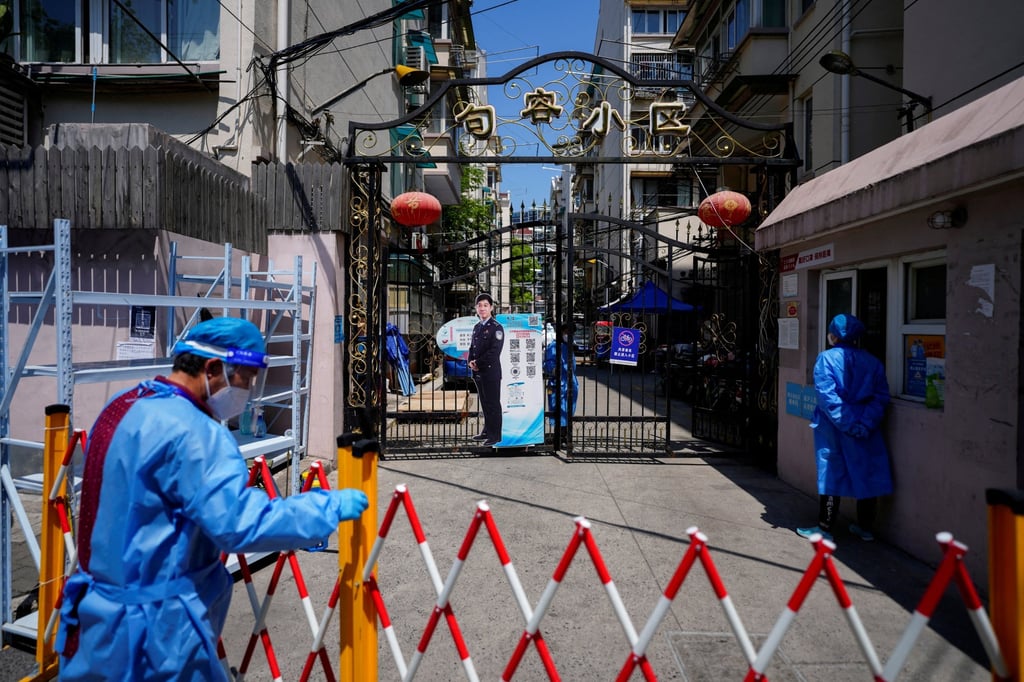
The government, however, has shown no signs of relaxing its strict containment measures. Zhao said on Thursday that, “No let-up is allowed, because any new infections can reverse the [declining] trend.”
The municipal government has yet to announce a time frame for lifting the citywide lockdown that started on April 1, and is enforcing the “static management” rule to double down on pandemic curbs to prevent the spread of the highly transmissible Omicron variant.
‘Just in time’ morphs into ‘just in case’ as Covid-19 cuts supply chains
Nearly all 16 districts in Shanghai have issued standstill orders – instructing residents to remain homebound, and curbing the movement of medical staff, delivery personnel and community volunteers – in pursuit of the city’s zero-Covid goal.
After eliminating the coronavirus in low-risk zones – “precautionary zones” without a single infection over the previous 14 days – the local government will let more companies resume operations under the “closed loop” system, where workers have to sleep on site to avoid contact with outsiders.
About 2,000 key manufacturers in Shanghai, including Tesla and China’s biggest chip maker, Semiconductor Manufacturing International Corp (SMIC), have been allowed to resume production since mid-April.
But few factories have the dormitories needed to accommodate every assembly worker to comply with the closed loop system, which means most manufacturers have to operate at a fraction of their capacity.
A survey of 142 Shanghai-based companies by the official Shanghai Securities News showed only 30 per cent of their production capacity was up and running as of May 7.
The American Chamber of Commerce said this week that 15 per cent of US companies allowed to restart production in Shanghai had yet to reopen as of May 5. Nearly 60 per cent of the respondents reported reduced production capabilities caused by a lack of employees and an inability to get hold of raw materials.
On Thursday, Shanghai Rural Commercial Bank (SRCB) reopened two outlets in Zhujing Town, in the southwestern district of Jinshan, becoming the first lender to do so amid the lockdown. The bank said its staff would sleep at the outlets to minimise contact with outsiders.
Jinshan is among the first six districts that claimed they had achieved the societal zero-Covid goal on May 1.
SRCB said that it would reopen more branches in areas where the risk of transmission was controllable.
Yu Hongwei, the deputy director of Shanghai Postal Administration, told a briefing on Thursday that 16 express companies in the city had restarted operations, handling a combined 1 million deliveries each day, or about a sixth of the volume before the pandemic started.

