China has discreetly taken 10 per cent of the world’s market for hydrogen fuel-cell vehicles. Here’s a look at the company leading the charge
- As the simplest possible molecule and the most abundant element in the universe, hydrogen is the ultimate, non-polluting fuel and energy-storage medium of the future
- Compared to solar and wind, hydrogen power does not fluctuate or depend on gusts or sunshine, plus they go further than EV batteries before refuelling

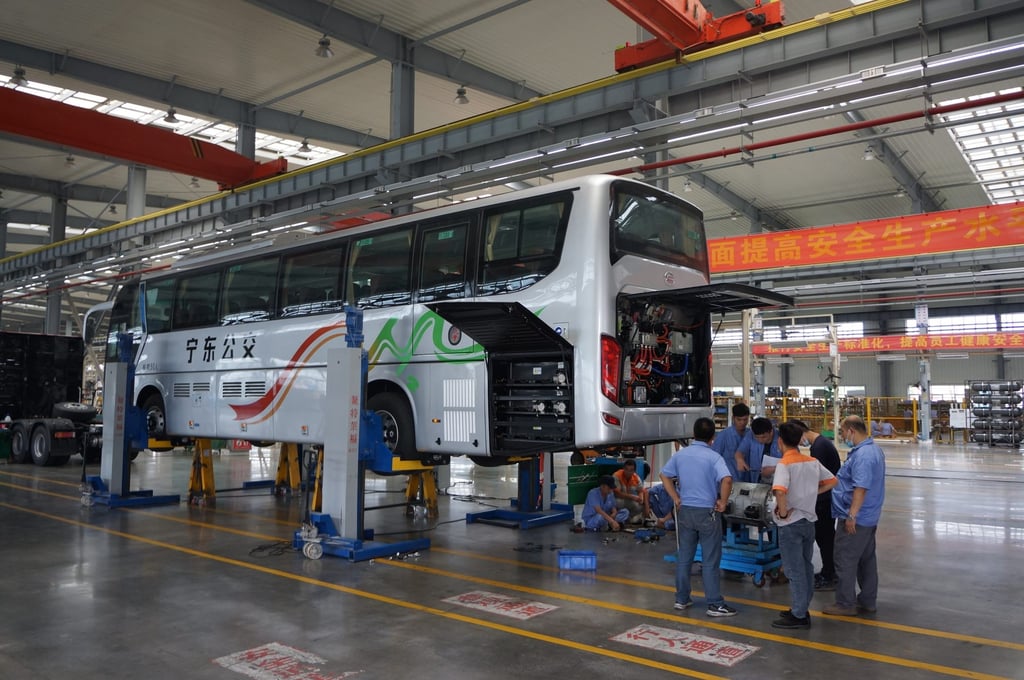
The vehicle looked much like any commuter bus on the road, with doors front and aft, two dozen seats and standing room. But when it gets going, the bus is powered entirely by burning hydrogen, in a process that generates water vapour as its sole by-product without any carbon dioxide or other climate-changing greenhouse gases.
The discreet look of the buses bound for Ningxia, one of China’s most impoverished regions, belies Sinosynergy’s ambitions in pushing for the embrace of hydrogen fuel cells. The company, which marks its seventh birthday on June 30, produces 70 per cent of China’s fuel cell stacks at the heart of the fuel-cell system.
“The hydrogen industry has evolved to the early stage of commercialisation and industrialisation,” Sinosynergy’s international head Cynthia Zhu said in an interview with South China Morning Post during a visit. “Similar to the development of the lithium-ion battery industry, the development of the hydrogen industry cannot take place without an efficient and effective regulatory framework, policy support, and technology advancement.”