Advertisement
Shanghai reopening: Tesla’s Chinese buyers face up to 24 weeks for delivery as carmaker scrambles to catch up with demand in ‘China’s Motown’
- The waiting time for the entry-level Model 3 electric cars, priced at 279,900 yuan each, is between 20 and 24 weeks, according to Tesla’s website
- The waiting time for the Model Y is between 10 and 14 weeks, Tesla said
3-MIN READ3-MIN
1

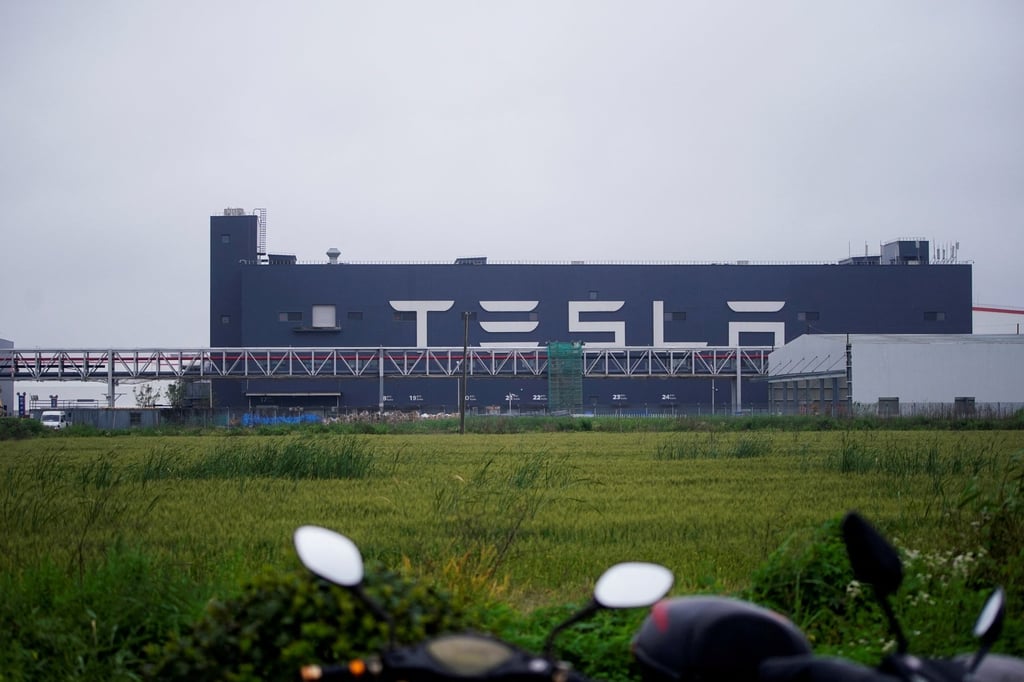
Tesla’s customers in China must wait up to six times longer for their favourite electric cars to be delivered, as the carmaker is still scrambling to restore output at Gigafactory 3 to full capacity, five days after Shanghai formally ended the city’s lockdowns.
The waiting time for the entry-level Model 3 electric cars, priced at 279,900 yuan (US$42,122) each, is between 20 and 24 weeks, according to Tesla’s website. The waiting period across all made-in-China models has stretched from the average three to four weeks last year to between 10 and 24 weeks, the carmaker said.
The longer wait underscores how Shanghai, dubbed China’s Motown for the city’s 11 per cent share of automobiles made last year in the world’s largest vehicle market, is struggling to repair the broken supply chains and production disruptions from two months of shutdown. That customers are willing to wait so long for a Model 3 or a Model Y shows how far Tesla’s competitors must go to snatch market share from the electric car industry’s bellwether brand.
Advertisement
“Tesla is still the first choice among Chinese fans of intelligent electric cars,” said Tian Maowei, a sales manager with Yiyou Auto Service in Shanghai. “The longer delivery time will not dent the buying interest of Tesla supporters.”
The enthusiasm has been ignited by the Shanghai government’s largesse, where a 10,000-yuan subsidy is granted to every purchase of a so-called new energy vehicle (NEV) for replacing an automobile powered by the internal combustion engine (ICE).
Advertisement
The grant, part of a 60-billion yuan financial package of tax breaks, incentives and subsidies, also applies to plug-in hybrid cars and hydrogen fuel-cell vehicles. The government is anxious to protect jobs and bolster consumption in an industry that hires one in six urban jobs.
Advertisement
Select Voice
Select Speed
1.00x