Goldman Sachs sees ‘no quick fix’ for China’s ailing property sector even as developers rally the most since November
- The Hang Seng Mainland Properties Index has risen 12 per cent so far this month, the most since gaining 70 per cent in November
- ‘The property weakness will likely be a multi-year growth drag for China,’ Goldman Sachs said in a report on Sunday

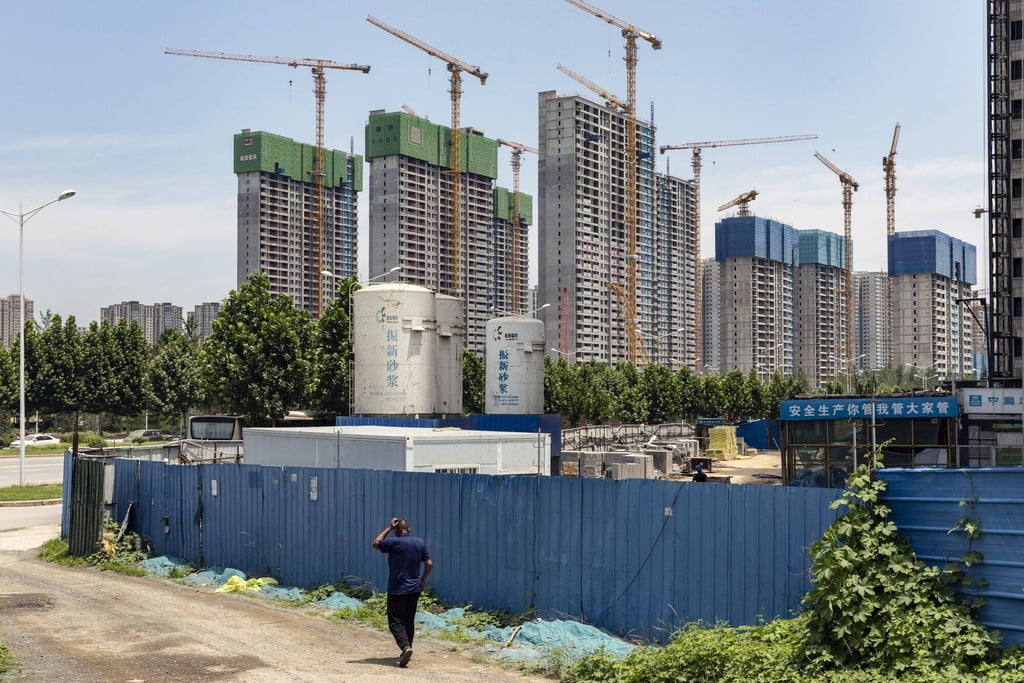
China’s ailing property market will weigh markedly on economic growth for years to come because of the shift in policy priorities, according to Goldman Sachs, pouring cold water on bets that have sent mainland Chinese developers’ shares soaring this month for the best performance since November.
The top priority of policymakers is to hold in check the slowdown in the real estate market instead of fuelling a new round of upcycle, like the one spurred by the nationwide shantytown renovation plans from 2015 to 2018, analysts led by Lisheng Wang at the US investment bank wrote in a report on Sunday. The policy focus has now shifted to supporting strategically important industries amid falling demand and weaker housing affordability, it said.
“Based on our estimates, the property weakness will likely be a multi-year growth drag for China,” the report said. “We see persistent weaknesses in the property sector, mainly related to lower-tier cities and private developer financing, and believe there appears [to be] no quick fix for them. We only assume an ‘L-shaped’ recovery in the property sector in the coming years.”
The bearish call may cause alarm among traders who have increased their exposure to property stocks over the past month, betting on more policy loosening for the sector seen as crucial for China’s US$17.7 trillion economy. The Hang Seng Mainland Properties Index has jumped 12 per cent so far this month, the steepest gain since November when the gauge surged 70 per cent. At least nine cities, mostly second- and third-tier cities including Qingdao and Suzhou, have recently eased restrictions on mortgage lending and home purchases to revive sales.
More easing could still be on the way to offset the downward pressure on growth, such as easier access to loans for new homebuyers and upgraders, cutbacks in mortgage rates and down payment ratios, and funding support for developers to make sure pre-sold homes are delivered, according to Goldman.