Goldman and UBS cut China growth forecasts, reining stimulus bets as property sector restrictions continue
- Goldman says wiggle room for more policy loosening is limited due to the challenging demographic trajectory, high debt levels and Beijing’s tough stance on property market
- Concerns are brewing borrowers will use cheap cash to pay off debt rather than using it for productive economic uses

Traders betting on a quick reversal in the fragile sentiment in Chinese stocks are in for disappointment, as economists are reining in their expectations of a large-scale stimulus and cutting growth forecasts for the world’s second-biggest economy.
Goldman lowered its 2023 growth projection to 5.4 per cent from 6 per cent in a Sunday report, explaining that top policymakers are now more focused on high-quality growth. Meanwhile, UBS said in a note on Monday that China’s economy would probably expand by 5.2 per cent this year, compared with its April forecast for 5.7 per cent growth, as policy support was likely to be mild.
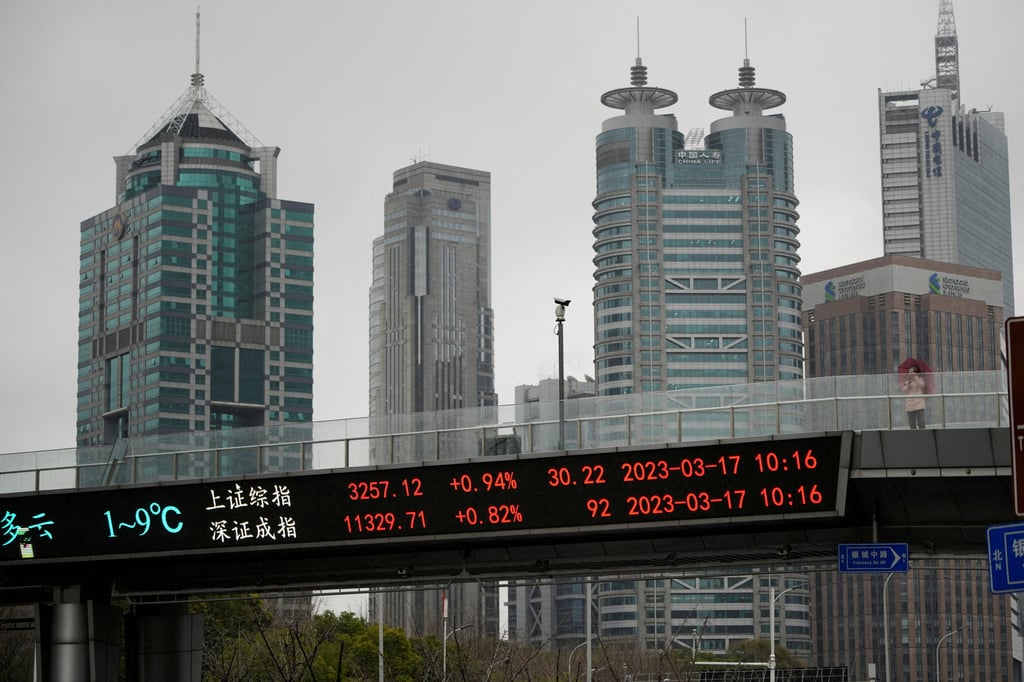
The call may take some wind out of the rally as expectations about more policy support have piled up after China’s key economic data trailed estimates last month. The central bank unexpectedly cut two policy rates each by 10 basis points before the data release, fanning speculation about a similar cutback in a benchmark borrowing cost when its monthly pricing is made on Tuesday. The Hang Seng Index and the CSI 300 Index both rose more than 3 per cent last week, delivering their best weekly performances this year.
The wiggle room for more policy loosening is limited due to the challenging demographic trajectory, high debt levels and Beijing’s tough stance on the property market, according to Goldman.
“Policymakers face constraints and the coming policy easing will not be as large and forceful as during the 2008-09, 2015-16 and 2020 cycles,” analysts led by Hui Shan at the US investment bank wrote in the report. “The persistent growth headwinds (property slowdown and confidence deficit in particular) are likely to win the upper hand in the tug of war between weakening growth momentum and increased policy easing.”