-
Advertisement
Electric & new energy vehicles
BusinessChina Business

How severe is the impact on Chinese EV makers after EU launches an anti-subsidy investigation

  • Any potential decision to impose higher tariffs on Chinese-made electric cars sold in the European Union may also trigger a retaliatory measure by Beijing
  • Chinese EV makers are expected to diversify exports to other countries and regions, analysts say, who also expect higher domestic demand to pick up some of the slack

Reading Time:3 minutes
Why you can trust SCMP
6
A man talks on the phone in a shop of Chinese electric vehicle manufacturer Xpeng, in Shanghai, China, 15 September 2023. The European Commission on 13 September had launched an investigation aimed at assessing the feasibility of imposing punitive tariffs on Chinese electric vehicle (EV) imports. The purpose of the measure is to protect European Union producers from the influx of less expensive EVs from China that allegedly receive state subsidies. The Commission is currently deliberating the option of imposing tariffs that exceed the standard rate of 10 percent, which could take up to 13 months to evaluate.  Photo: EPA-EFE
Daniel Renin Shanghai
Chinese electric vehicle (EV) builders hit a roadblock after the European Commission (EC) launched an anti-subsidy investigation last week, which is likely to affect annual exports of more than 2 million battery-powered vehicles projected to be sold in the continent by 2030.

A potential decision to impose tariffs higher than the standard 10 per cent rate for Chinese-made electric cars in the European Union (EU) may also trigger a retaliatory measure by Beijing to curb imports of European-made vehicles, analysts say.

“The investigation is a serious matter for the Chinese EV makers because a higher tariff could put a stumbling block to export growth of their cars to Europe,” said David Zhang, a visiting professor at Huanghe Science and Technology College. “It may trigger a chain reaction because Beijing can slap punitive tariffs on European-made cars, too.”
Advertisement
On Wednesday, the EC began an investigation into Chinese-made EVs that are suspected of benefiting from state subsidies at the expense of European competitors.
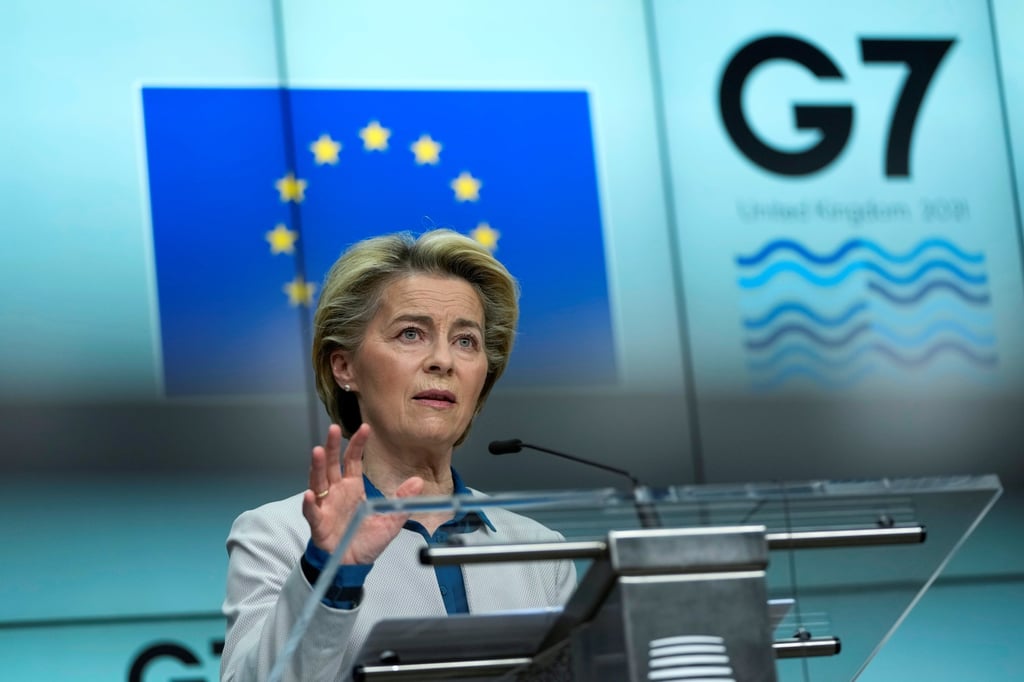
European Commission President Ursula von der Leyen speaks at a news conference. Photo: Reuters

“Global markets are now flooded with cheaper electric cars. And their price is kept artificially low by huge state subsidies,” commission President Ursula von der Leyen said in her annual address to the bloc’s parliament.

Advertisement
Advertisement
Select Voice
Choose your listening speed
Get through articles 2x faster
1.25x
250 WPM
Slow
Average
Fast
1.25x