Advertisement
China property
BusinessChina Business

Chinese property developer CIFI swings into a loss in the first half of the year, shares plunge after trading suspension lifted

  • CIFI’s shares fall 59 per cent, dropping its value to HK$3.3 billion, nearly 96 per cent below a 2021 peak
  • The company says it will strengthen its sales efforts, especially ‘in the cities with incentive policies’

3-MIN READ3-MIN
CIFI Holdings Group. Photo: Handout
Jiaxing Li

Shares of debt-stricken property developer CIFI Holdings Group plunged by the most on record after trading resumed following a six-month suspension due to delay in filing financial results, with the company unveiling overnight a loss in the first half of the year.

The stock fell by 59 per cent to HK$0.31, and it has now lost nearly 96 per cent of its value from a peak in April 2021. Its capitalisation has been reduced from an all-time high of around HK$64 billion (US$8.2 billion) to a mere HK$3.3 billion.
In its delayed earnings release, the company turned to a loss of nearly 9 billion yuan (US$1.2 billion) for first half of the year, from a profit of 1.9 billion yuan a year ago. It logged a 13 billion yuan loss for 2022, filings showed. But the company’s long-term liabilities shrank to 34.8 billion yuan by the end of June 2023, from 41.3 billion yuan at the end of 2022 while working capital dropped to 30.6 billion yuan from 49 billion yuan in the same period, indicating balance sheet downsizing.
Advertisement
Meanwhile, China’s property debt crisis continued worsening, with China Evergrande Group, the world’s most indebted developer, missing yet another bond repayment this week even as it faces a winding up petition next month. The company has scrapped six creditor meetings scheduled for this week, and it disclosed its inability to meet regulatory requirements to issue new bonds while its mainland China unit failed to repay a note.
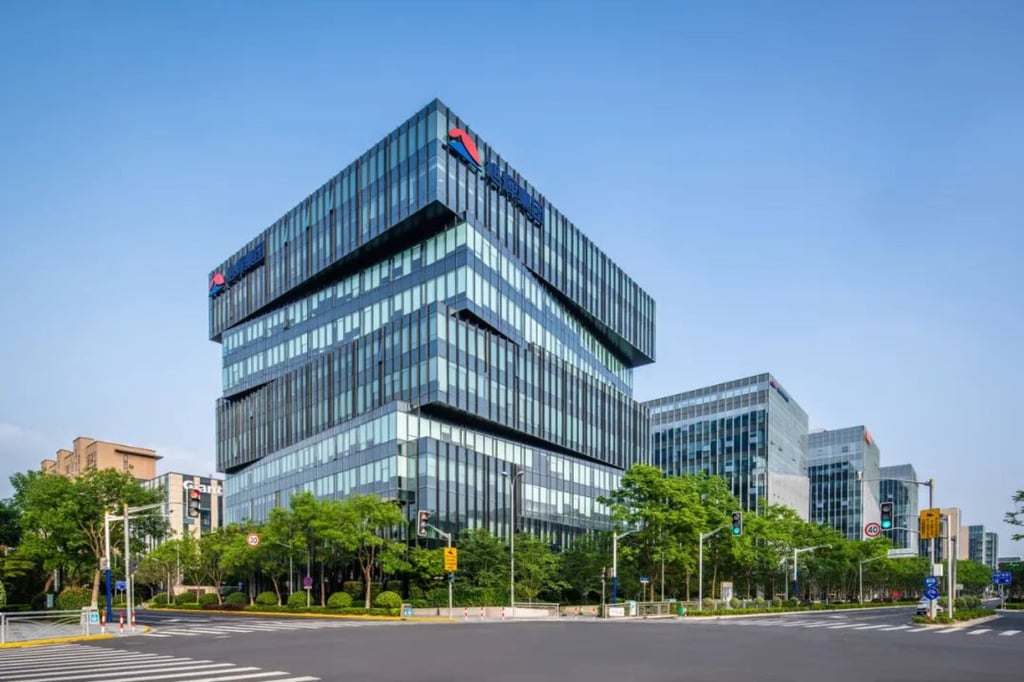
CIFI Holdings (Group) headquarters in Shanghai. Photo: Handout

A gauge tracking mainland developers listed in Hong Kong declined 6.2 per cent this month to trade near a one-year low. Meanwhile, an ICE BofA index tracking US$18.2 billion worth of Chinese junk bonds, mostly issued by developers, has lost nearly a quarter of its value this year.

Advertisement
CIFI’s woes started last October when it failed to make a repayment on a US$318 million offshore bond, which was followed by a downgrade by Moody’s to “C” from “Caa1”. Moody’s analysts said the downgrade reflected the company’s “increased liquidity and default risk, and weakened recovery prospects for the company’s creditors because of its liquidity stress and pressure on operating performance”. In the following month, the company terminated discussions with individual creditors and offshore creditors, dealing a setback to its restructuring efforts. Later in March, the developer sought to sell its major assets in Shanghai after a state-guaranteed bond issuance hit a snag.
Advertisement
Select Voice
Select Speed
1.00x