Gloom lingers for Chinese stocks in fourth quarter as slowing growth and property crisis continue to unfold
- Analysts see little chance of impactful stimulus measures, nor strong economic data to provide a spark
- ‘It is clear that unless an influx of domestic money happens, the market will remain depressed,’ an investment officer says
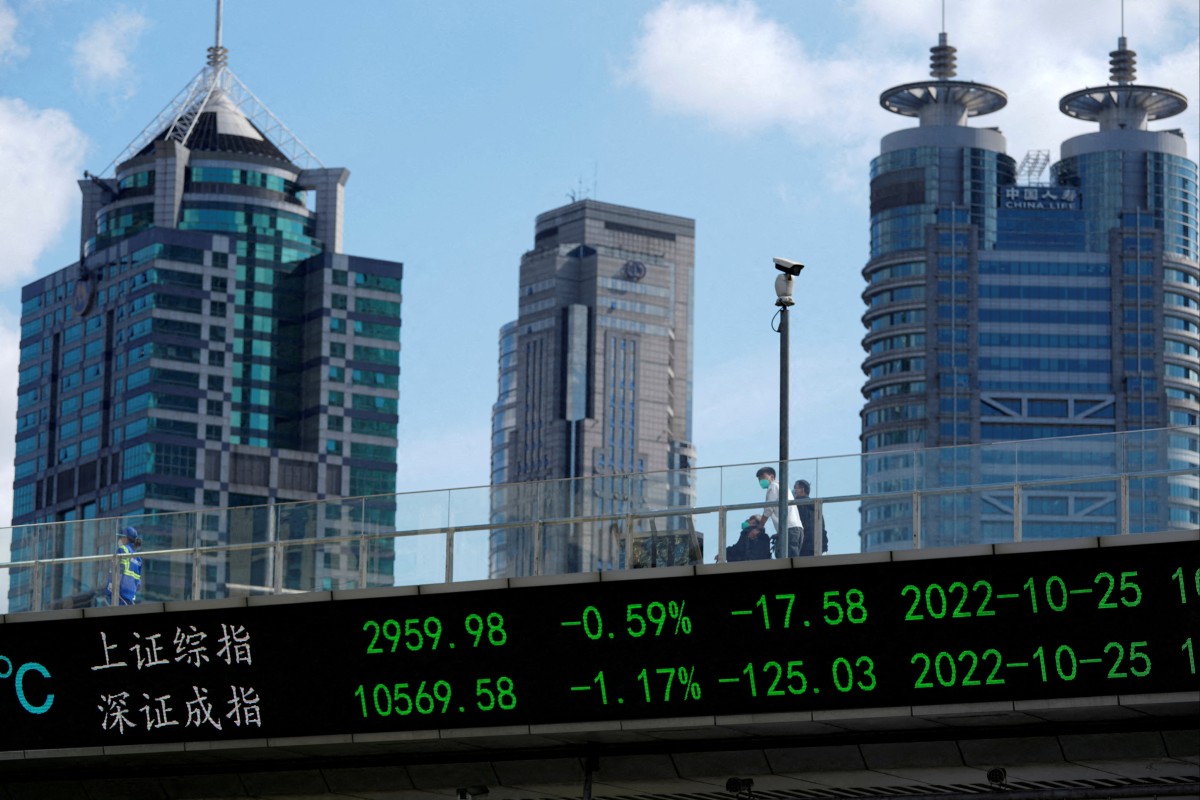
The fourth quarter will remain challenging for Chinese stocks, as investors contend with a gloomy outlook from a slowing economy and deepening woes in the property market while analysts see little hope of a stimulus spark to ignite a rally.
“We are cautious about stocks in the fourth quarter,” said Wang Zheng, chief investment officer at Jingxi Investment Management in Shanghai. “There isn’t a big chance that the economy will have a major turnaround then. The government is unlikely to roll out stronger measures to rescue the market again, unless stocks fall to an extremely low level that will put policymakers on edge.”
The CSI 300 Index of yuan-traded stocks fell 4 per cent last quarter, and the Hang Seng Index dropped about 8 per cent. The declines came even after Beijing unveiled a flurry of measures to prop up growth and stocks, from halving the stamp duty on equity transactions to reducing mortgage rates and the reserve requirement ratio for banks. Policymakers have so far remained restrained in loosening policies, favouring a growth model that focuses on green energy and technology self-sufficiency rather than flooding the economy with excessive liquidity.
Nationwide new-home sales dropped 32 per cent in the week ending September 30 compared with the same period in 2019, according to Nomura Holdings. Sales in smaller cities fell by at least 35 per cent in the same span.