Advertisement
Banking & finance
BusinessChina Business

China’s ramp-up of belt and road investments plays to Hong Kong’s strengths: HSBC

City set for bigger role in green finance, offshore yuan as initiative shifts towards private sector-led projects, economist says

Reading Time:2 minutes
Why you can trust SCMP
New wind turbine blades sit at a factory on July 15, 2022 in Handan, in China’s northern province of Hebei. Photo: VCG via Getty Images
Aileen Chuang
Hong Kong is poised to gain from mainland China’s expanding Belt and Road Initiative, as new projects under the effort to build a China-centred economic network increasingly focus on green development, digital transformation and trade-corridor connectivity, according to HSBC.
Hong Kong, with its strengths in green finance and status as the world’s largest offshore yuan hub, was set to play a bigger role as the 12‑year‑old belt and road plan shifted towards more private sector-led projects across its 150 member countries, particularly in Southeast Asia and the Middle East, said Jing Liu, the bank’s chief economist for Greater China, in a briefing on Thursday.
In addition, Hong Kong’s stablecoin ordinance, which regulates digital tokens pegged to fiat currencies and other reserve assets, could support the internationalisation of the yuan, she added. This was because it aligned with the belt and road plan’s increasing investments in emerging markets and higher use of the yuan for settlement, she said.
Advertisement

“The Belt and Road Initiative began with an early emphasis on large overseas infrastructure projects, but has gradually shifted to ‘small and beautiful’ projects”, with greater emphasis on “green development, digitalisation and hi-tech content”, Liu said. Hong Kong stood to benefit from the steady growth of the initiative thanks to its deep ties to mainland China’s economy, she said.

The share of total Chinese overseas direct investments going to the initiative rose to 25 per cent in the first six months of 2025 from an average of 16 per cent in 2021 and 2022, according to HSBC research.

Advertisement

China’s overseas investments were expected to accelerate amid the US-China tariff tensions, which propelled production closer to end consumers to supplement exports, Liu said. Chinese companies’ globalisation strategies would also continue, she added.
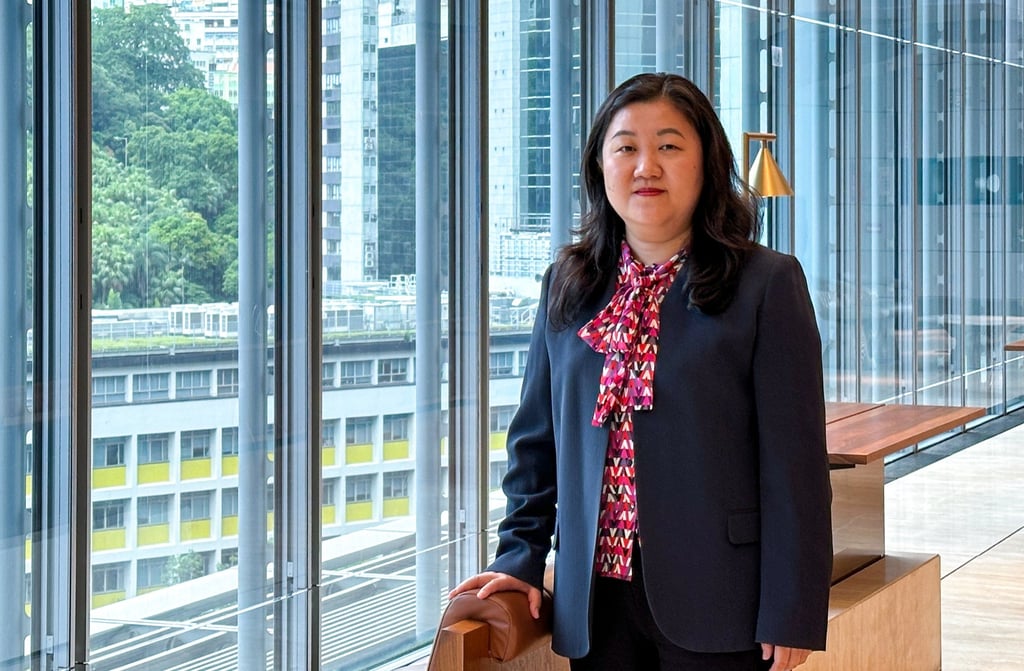
Jing Liu, HSBC’s chief economist for Greater China, pictured at the bank’s offices in Central on September 4, 2025. Photo: Aileen Chuang
Advertisement
Select Voice
Choose your listening speed
Get through articles 2x faster
1.25x
250 WPM
Slow
Average
Fast
1.25x