Sitting on a gold mine
Mongolia boasts a massive wealth of resources waiting to be tapped but poor infrastructure is hindering the country's ability to be competitive

Sitting atop vast mineral wealth and wedged between the fast growing economies of Russia and China, the potential for Mongolia to become a Norway of the steppes is tantalisingly close.
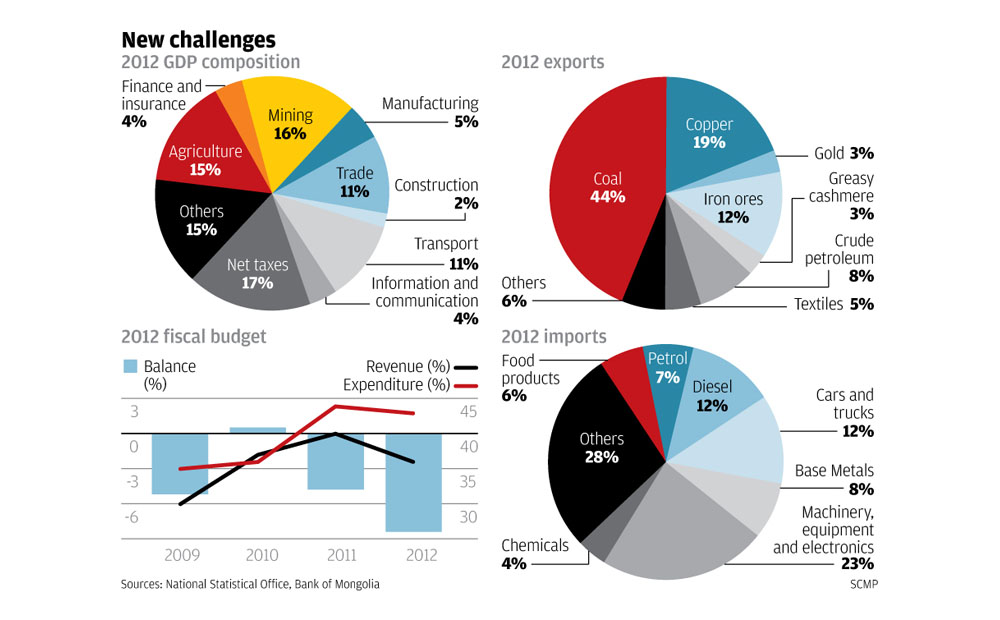
Miners have found vast deposits of coal, iron and copper, with much of the country yet to be geologically surveyed. One copper and gold mining project alone, Oyu Tolgoi, is expected to boost gross domestic product by a third once at full capacity. The challenge is to extract these minerals efficiently and invest the proceeds in a sustainable way.
With an area of more than 1.56 million sq km and with nearly half its 2.8 million populace in the capital Ulan Bator, Mongolia is one of the world's most sparsely populated countries. Outside the cities, a nomadic lifestyle means limited need for road or rail.
This lack of infrastructure is having an impact on Mongolia's ability to mine its resources efficiently. While extraction costs are highly competitive, it costs up to US$18 a tonne to truck coal from Mongolia's mines to China's border, double the cost of shipping a tonne from Australia.
The challenge is made tougher by price projections over the coming decade. Data from commodity research specialists CRU indicate additional supply from new mines will mean softer prices for iron ore and copper while coal should remain stable. "The party is largely over," said CRU's China chief executive John Johnson.
Investing in infrastructure is cited as a key first step to help the country upgrade its competitiveness. Using money raised on the global debt markets, the Mongolian government is building thousands of kilometres of roads, and rail links are being discussed.