Advertisement
China pork crisis
BusinessCommodities

China’s diners must pay more for their favourite meat or forgo pork at mid-autumn as swine fever decimates supply

  • The price of pork – steamed, fried, barbecued, boiled, stewed and cooked in a myriad of ways – jumped 46.7 per cent in August compared with last year
  • African swine fever, which is harmless to humans, is deadly for pigs, destroying 32.2 per cent of China’s hogs in July

Reading Time:5 minutes
Why you can trust SCMP
scmp
Eric Ng
As mid-autumn celebrations get under way, dining tables across China will be paying more for their favourite pork dish, or looking to substitutes, as the country’s biggest outbreak of a hog disease decimated the meat’s supply and caused prices to soar.
The price of pork – steamed, fried, barbecued, boiled, stewed and cooked in a myriad of ways – jumped 46.7 per cent in August compared with last year, as African swine fever sent China’s favourite meat into a severe shortage. The price of pork, at an eight-year high, fuelled the overall cost of food to a 10 per cent gain, which propelled China’s August inflation to accelerate by 2.8 per cent.

Expensive pork, which makes up two-thirds of the annual meat consumption for the average non-Muslim Chinese household by one estimate, is forcing consumers to make hard choices: pay more, or eat less of the meat.

Advertisement

“My mother ended up buying chicken, when the price of her pork ribs jumped to 51 yuan a kilogram the other day, from 30 yuan a few months ago,” said Sophie Yu, a Beijing office worker. “The local supermarket saleslady said pork price has been rising every day. But nobody is complaining, and the meat portions in the restaurants have not shrunk.”
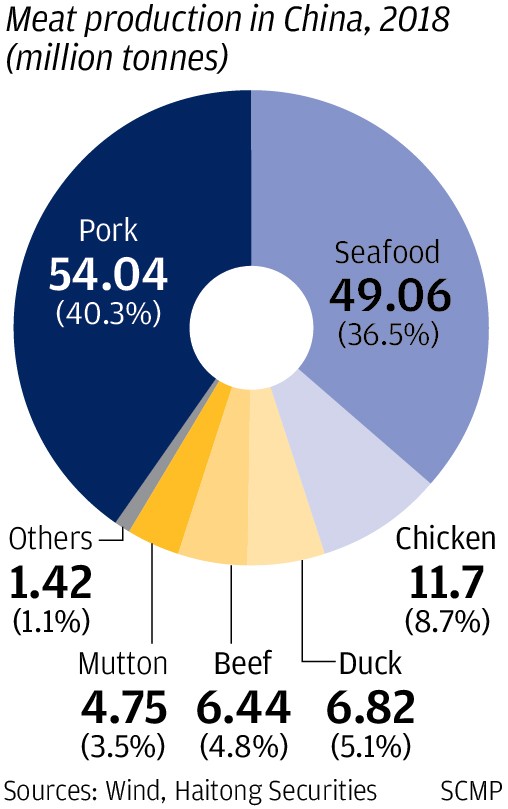
SCMP Graphics
SCMP Graphics
Advertisement
African swine fever, which is harmless to humans, is deadly for pigs, destroying 32.2 per cent of China’s hogs in July, while the number of sows – the benchmark for how many pigs are added to the livestock capacity – tumbled by 31.9 per cent, China’s Agriculture and Rural Affairs Vice Minister Yu Kangzhen said last week.

Since a pig’s life cycle lasts from 12 to 14 months before it is old enough for slaughter, it takes at least a year before more supply can be brought to market and for prices to stabilise, according to Daiwa Capital Markets’ economists.

Advertisement
Select Voice
Choose your listening speed
Get through articles 2x faster
1.25x
250 WPM
Slow
Average
Fast
1.25x