Are zombie cordyceps real in ‘The Last of Us’? Humans turn the table on bug-eating parasitic fungus in China
- In the real world, a species of the sac fungi called the ophiocordyceps sinensis attacks caterpillars, uses its mycelia to replace the hosts’ tissues to turn them into vegetation
- The fungi, highly sought after in traditional Chinese medicine, are now being farmed on an industrial scale in China’s Hubei province

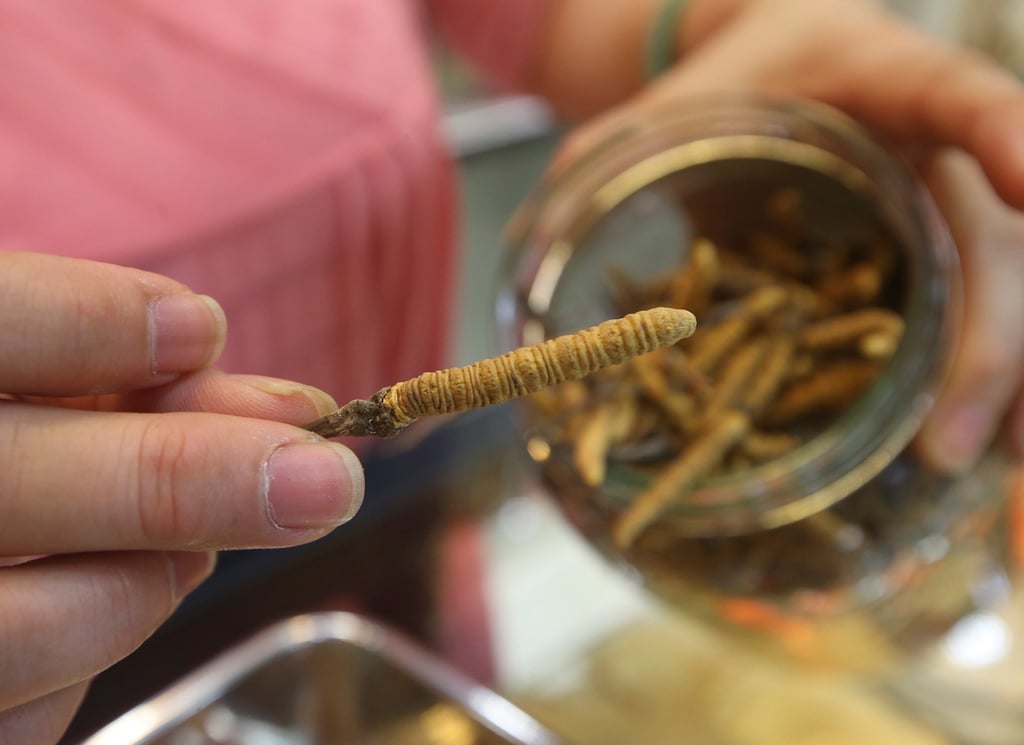
In the real world, a species of the sac fungi called the ophiocordyceps sinensis is best known for attacking moth caterpillars, using its mycelia to replace the hosts’ tissues and turn the worms into vegetation. Infections usually start during winter in the fungi’s home in the Tibetan highlands, completing the cycle in the summer months, giving cordyceps the Chinese moniker Dongchong Xiacao to describe how the winter bug becomes grass in summer.
The fungi, highly sought after in traditional Chinese medicine (TCM), are now being farmed on an industrial scale in China’s Hubei province. In Yidu, a county of fewer than half a million people, HEC Health has been growing cordyceps since 2007, harvesting about 50 tonnes – as much as 30 per cent of all the cordyceps collected from the wild – every year for the market.
“We created a natural environment similar to the Tibetan plateau in temperature, humidity and ultraviolet light,” said Qian Zhengming, deputy director of the cordyceps research unit at HEC Health, in a recent interview with the Post. “Our computers control the climate in different rooms to make sure the cordyceps can be cultivated all year round.”