Tencent’s 2,636 per cent rally in a decade explains why Asia’s stock boom is different this time around
As Asia’s benchmark stock index climbs to within a few points of its November 2007 peak, tech companies are jumping squarely onto centre-stage.

For most of the past two decades, technology companies have been supporting players in Asian equity markets -- rarely taking leadership roles during rallies and almost always ceding the spotlight to the region’s giant financial firms.
Not any more. As Asia’s benchmark stock index climbs to within a few points of its November 2007 peak, tech companies are jumping squarely onto centre stage.
Led by Tencent Holdings’ 2,636 per cent surge over the past 10 years, tech has surpassed finance as the largest component of the MSCI Asia Pacific Index for the first time since the internet bubble burst in 2000. The industry is climbing twice as fast as its closest rival in Asia this year and has trounced gains among tech shares in the U.S. and Europe.
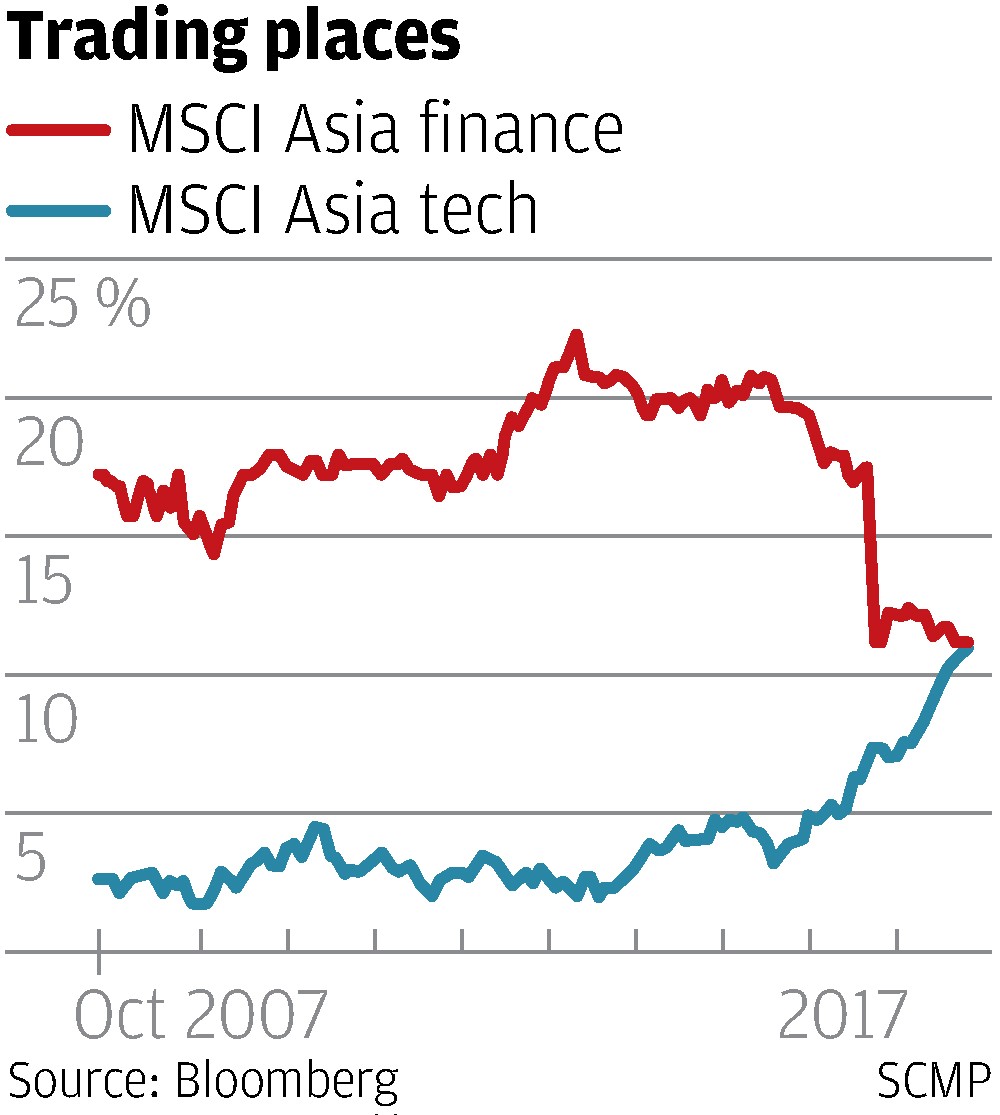
“Prices are high, but earnings are strong,” said Guillermo Felices, who helps oversee about US$93 billion as a London-based senior portfolio manager at BNP Paribas Asset Management. “I see it as a structural, secular story rather than a cyclical one. That’s very different from the situation in the late 1990s when we saw the dot-com bubble.”
Like their global peers, tech shares in Asia have surged on optimism that the sector will grab a bigger slice of traditional businesses from finance to retailing and health care. But Asia’s tech companies have also benefited from home grown trends, most notably China’s efforts to increase the role of tech and service industries in its US$11 trillion economy.
Tencent, which added more than US$400 billion of market value over the past decade, has been one of the largest beneficiaries of China’s shift. While the Shenzhen-based firm still earns a big chunk of its profits from online games, much of the stock’s rally in recent years has been fuelled by expectations that a favourable policy environment in Beijing will help boost its still-nascent advertising and finance businesses -- both of which target WeChat’s nearly one billion users.