Six months after the largest listing reform in three decades, what has Hong Kong exchange gained?
- 19 Chinese new-economy firms raised HK$115.8 billion in Hong Kong in the first nine months, more than double the HK$53.8 billion raised by 17 companies in New York, according to HKEX data

Six months after pushing through the biggest change in Hong Kong’s listing rules in three decades, what has the Hong Kong Exchanges and Clearing (HKEX) gained?
Its stock price has plunged nearly 19 per cent since April 30 when the reform kicked off, losing HK$60.53 billion (US$7.72 billion) in value.
When HKEX chief executive Charles Li Xiaojia touted the success of the listing reforms that the exchange operator had pushed through with the city’s securities watchdog agency, he described it as the biggest game-changer since 1993, when Chinese companies were able to raised capital in Hong Kong through H shares.
“It will not be in the single digits - more than a dozen companies will apply” to raise capital in Hong Kong, Li said at the time.
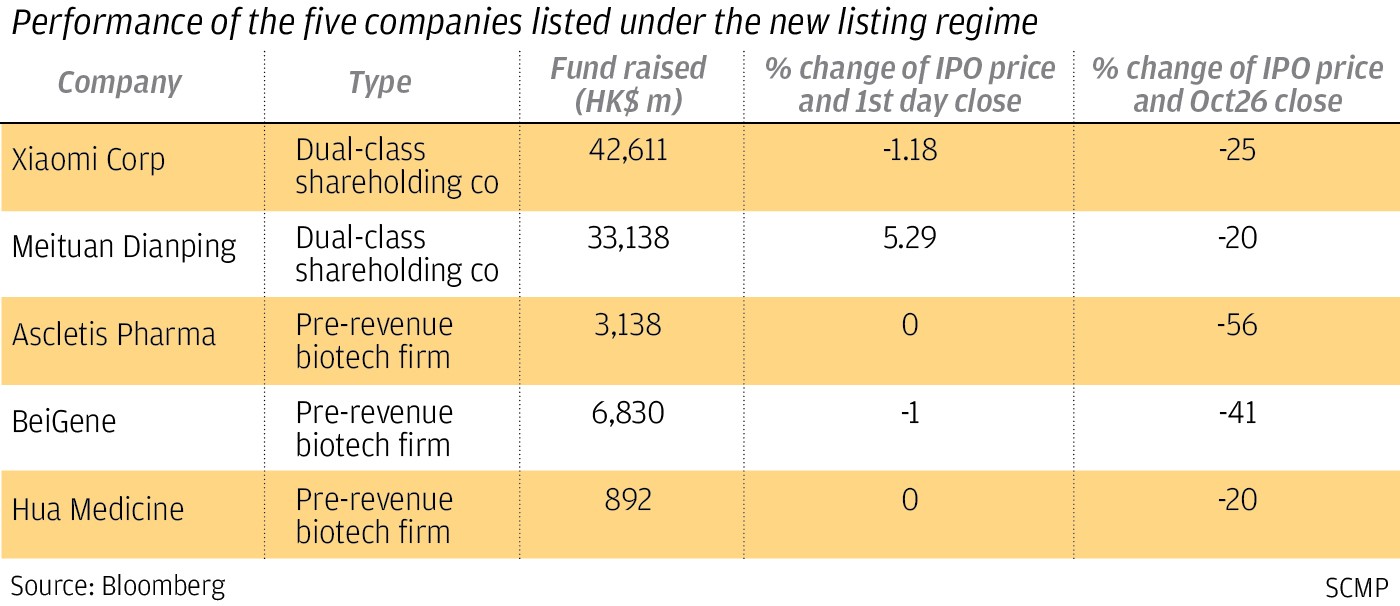
The reform opened the way for tech companies with weighted voting rights - commonly known as dual-class shares - and pre-revenue biotech firms to raise capital.