Creditors seize HNA unit’s assets in Singapore, China and US after CWT missed payment deadline on US$179 million of loans
- CWT International missed a 9am April 17 deadline to repay HK$1.4 billion (US$179 million) of loans
- The company’s assets in Singapore, China and the US were seized

Lenders to HNA Group’s CWT International seized control of assets in Singapore, China and the US after the unit failed to repay amounts due on its credit facility.
Assets that are being taken over include shareholdings of Singapore-based CWT, with investment properties in the US and golf courses in China, according to a statement. Lenders had threatened to take control of the assets unless CWT made payments by 9am on April 17 tied to a HK$1.4 billion (US$179 million) loan taken out in September.
Operations of CWT are continuing as usual and trading in CWT International shares will remain suspended, according to the statement. HNA Group’s US$200 million bond due 2021 was indicated at a record low of 77 US cents on the dollar on Tuesday, according to traders.
That setback for HNA suggests that the Chinese conglomerate is still struggling to cope with its debt after embarking on more than US$25 billion of asset sales since 2018, unwinding one of the biggest global acquisition binges in the nation’s history. CWT said last week it had redeemed in full its S$100 million (US$74 million) 3.9 per cent notes due April 18.
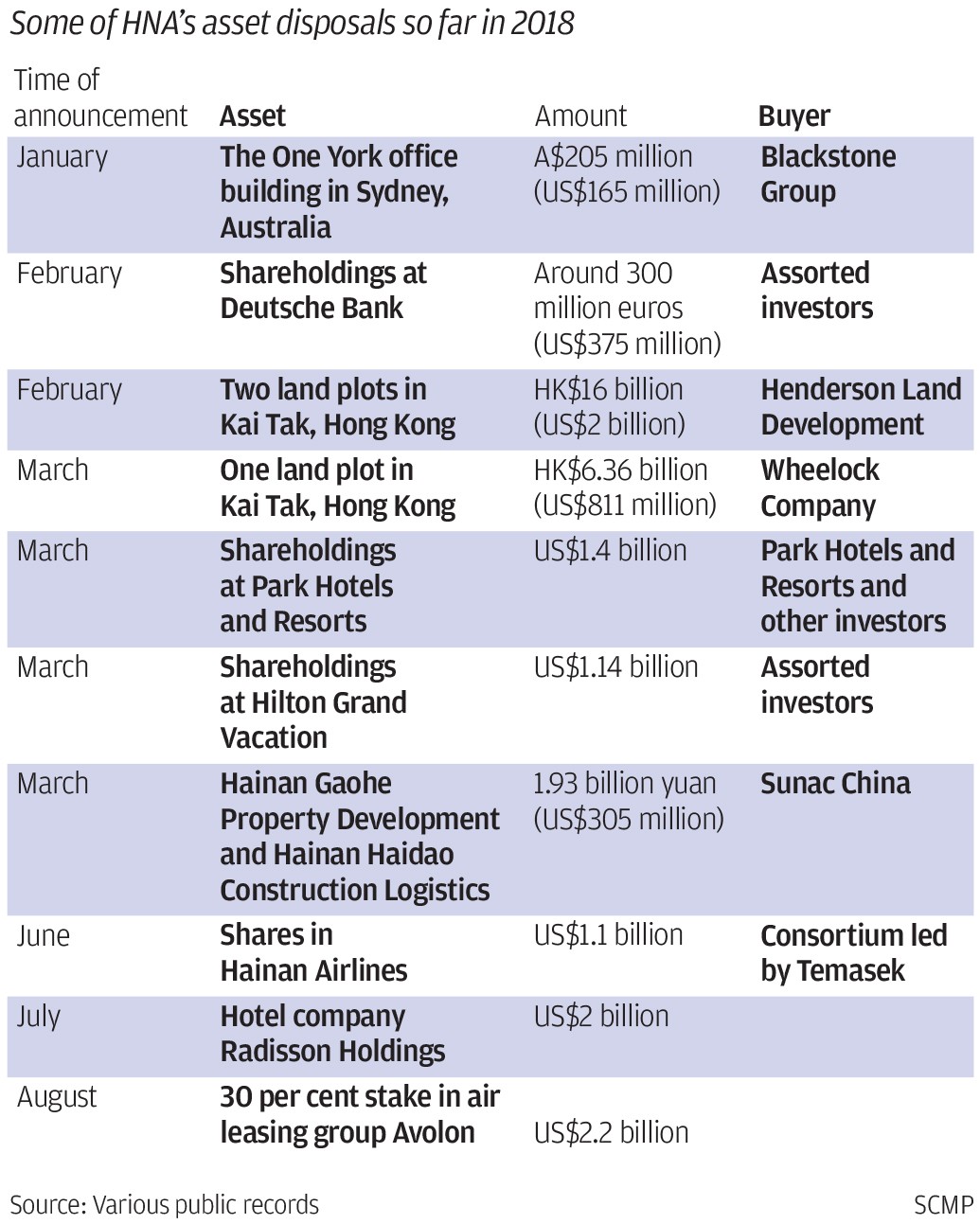
Chinese companies including HNA, Anbang Insurance Group and Dalian Wanda Group have been unloading assets in recent years after attracting government scrutiny because of the financial risks associated with their debt-fuelled expansions. HNA’s asset sales alone have exceeded US$20 billion since 2018, while the founder of Anbang – a firm temporarily seized by the government last year – is now serving jail time.
Besides the crackdown on the big conglomerates, China’s capital controls are limiting individuals’ spending on global real estate as the government tries to guard against any large and destabilising exodus of cash from the economy.