US-China trade war could reignite any time as ceasefire is a calm in the middle of a storm, say economists, strategists
- Despite G20 truce, resolution of trade tensions could be ‘painful’ for both the US and China
- Trade war is ‘far from over’, according to Bank of America Merrill Lynch
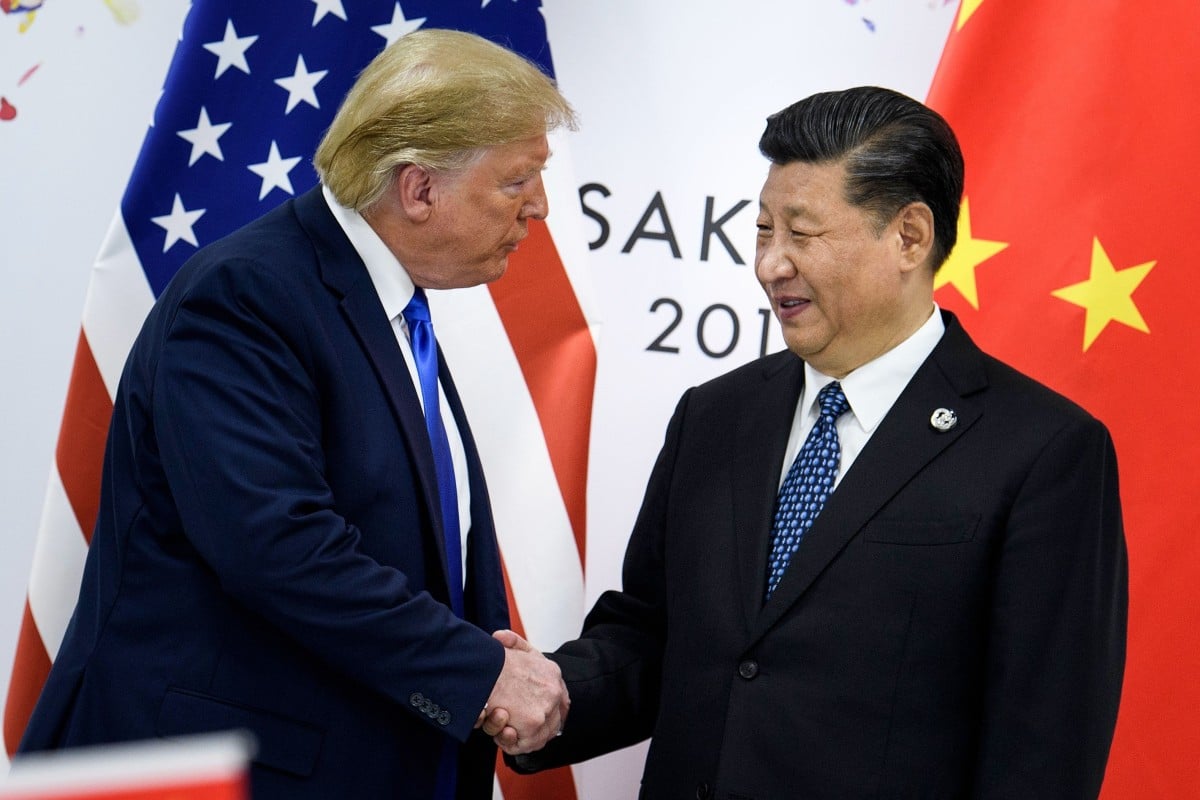
A ceasefire in the US-China trade war reached at the G20 summit in Osaka will not lead to a permanent resolution any time soon, with both sides likely to experience additional “pain” in the interim, according to economists and investment strategists.
“We should be thinking of this as a calm in the middle of the storm here,” Ethan Harris, head of global economics at Bank of America Merrill Lynch, said. “Actually, the trade war is far from over, even with the ceasefire. There’s a lot of things to talk about going forward.”
Bank of America believes there is a possibility of some form of deal in late summer, but there’s also a potential risk of another round of tariffs being added before any deal is reached.
US President Donald Trump has used tariffs as a battering ram since last year to try to force China to change decades of trade and industrial policy by Beijing that he claims treat American companies unfairly.
After meeting Chinese President Xi Jinping at the Group of 20 summit, Trump delayed tariffs on some US$300 billion of Chinese imports and the world’s two biggest economies agreed to resume trade talks following a breakdown in discussions in May. The US still has 25 per cent levies on about US$250 billion of Chinese-made goods.
On Tuesday, Chinese Premier Li Keqiang said that the country would move up the schedule to open up the financial services sector in China by a year to 2020 and make changes in the country’s foreign investment laws in an apparent concession to the US.