China scraps QFII and RQFII investments quota to allow unrestricted access to world’s second-largest capital market
- China’s currency regulator has announced that it would scrap the investment quotas under the QFII and RQFII programmes
- The Qualified Foreign Institutional Investor (QFII) programme, introduced in 2002, lets investors buy China’s yuan-denominated A shares. The RQFII programme, introduced in 2011, is denominated in yuan

China scrapped two equity investment limits for foreigners, giving global traders unfettered access to the world’s second-largest capital market in another move in the country’s economic liberalisation.
The removal of the first quota, after 17 years of a gradual, regulated opening of China’s equities, removes one of the major vestiges of the country’s closed capital markets. It is also a nod to the ongoing negotiations to resolve the year-long US-China trade war, which has sought to remove restrictions on foreign investments, address American concerns of China’s track record on intellectual property, among other trade issues.
“The move is an important measure that China has taken to further open up the financial markets,” said Min Liangchao, a strategist at HSBC Jintrust Fund Management in Shanghai. “In the long run, it will attract more overseas funds to the A-share market. It’s a positive move, either in terms of increasing liquidity or further establishing the value investing concept.”
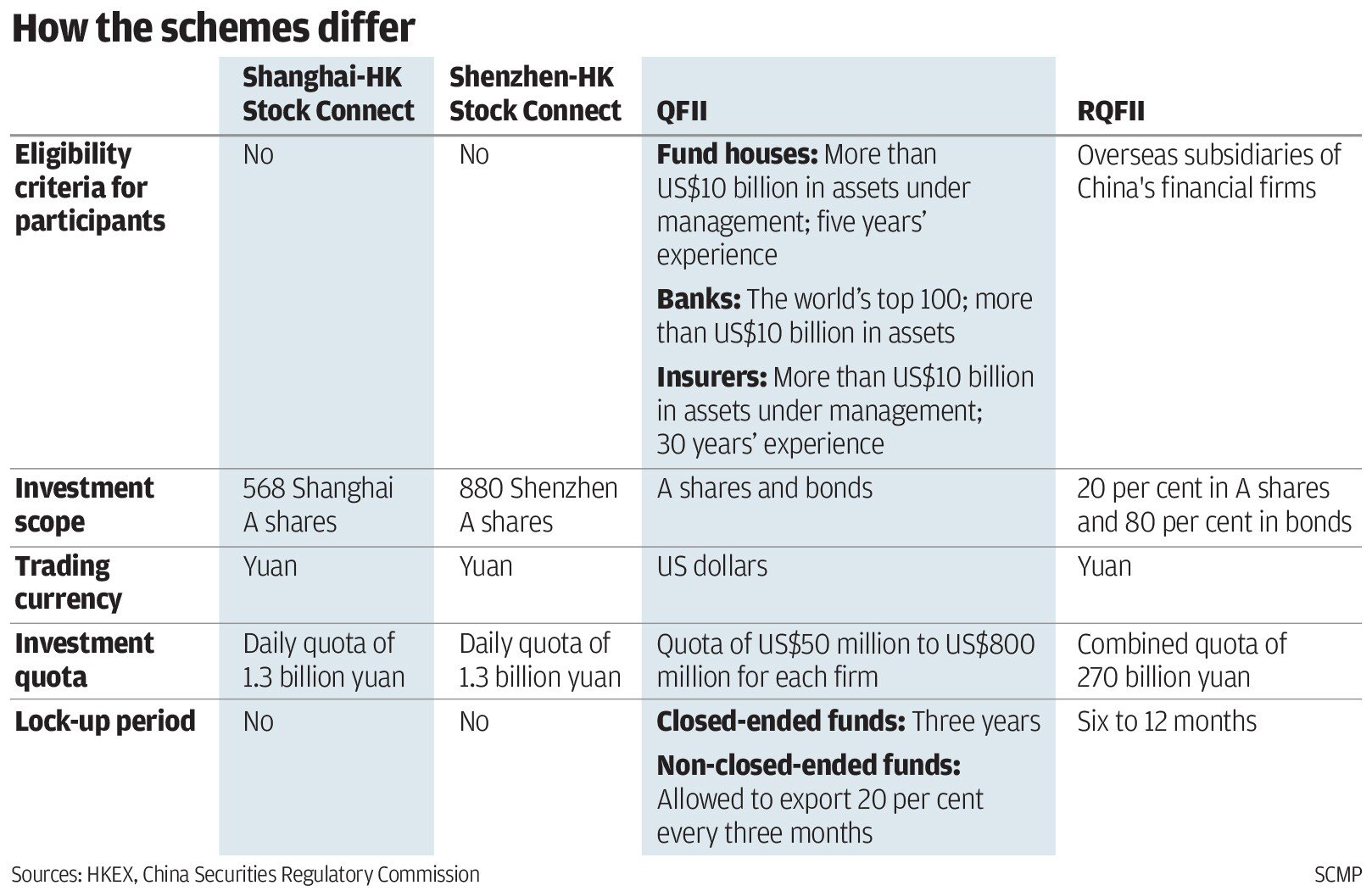
As many as 292 overseas foreign investors, including fund management firms and sovereign funds, were approved to invest a combined US$111.4 billion in Chinese stocks and bonds as at the end of August, according to the foreign exchange regulator. The RQFII approved quotas amounted to 693.3 billion yuan, the data showed.
China now still imposes restrictions on domestic individuals investing in securities overseas. They need to go through the Qualified Domestic Institutional Investor (QDII) scheme, in which banks and asset management firms invest on behalf of individual investors after getting quotas from the government.