After raking up US$5 billion in losses in four years, China’s Tesla wannabe fights for survival as financial bleeding continues
- Nio is poised to report on Tuesday that it lost another 2.6 billion yuan, or US$4 million a day, during the second quarter, according to the average of two analyst estimates
- That would bring accumulated losses at the company to about US$5.7 billion since William Li founded the carmaker in 2014

It took Tesla about 15 years to rack up US$5 billion in losses. The company known as China’s Tesla did it in four.
The bleeding continues. Shanghai-based NIO is poised to report Tuesday that it lost another 2.6 billion yuan (US$369 million) — around US$4 million a day — during the second quarter, according to the average of two analyst estimates.
That would bring accumulated losses at the company, which is backed by technology giant Tencent Holdings, to about US$5.7 billion since William Li founded the carmaker in 2014.
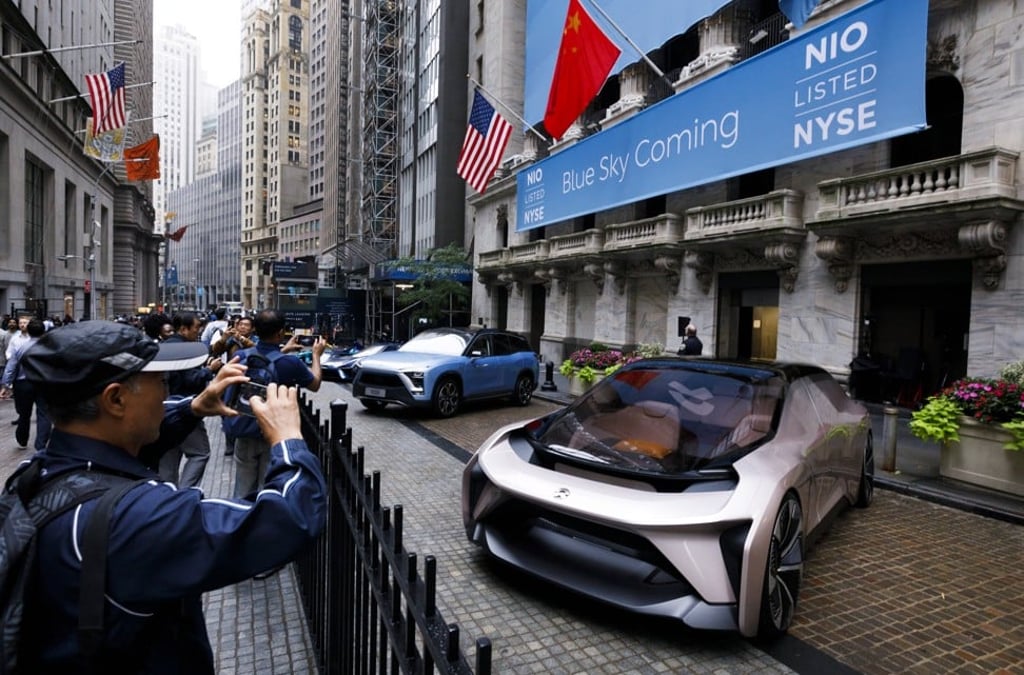
Cost overruns, weak sales, and major recalls have led NIO to plunge 74 per cent since its market value hit a record US$11.9 billion about a year ago. More broadly, the company’s reversal of fortune illustrates why concerns are mounting that China created an electric-vehicle bubble that may be about to burst.
“This year and the next, there’s going to be a lot of card-shuffling for these EV startups,” said Siyi Mi, an analyst at Bloomberg NEF. “Before, venture capital chased after them, but it’s not the case any more.”
Total EV sales in China, where half of the world’s electric cars are sold, fell for the first time in July after the government scaled back subsidies. Deliveries dropped again in August, raising doubts that one of the final pillars of strength in China’s broader auto market, which has fallen 14 out of the past 15 months, is wavering.