When extra days wouldn’t spur Chinese consumers to spend, retailers open late into the night to loosen purse strings
- China’s policymakers are pinning their hopes on the younger demographic to move the country towards a consumer-driven economy
- Businesses in China are taking advantage of government incentives to entice younger consumers to spend more on after-hours activities

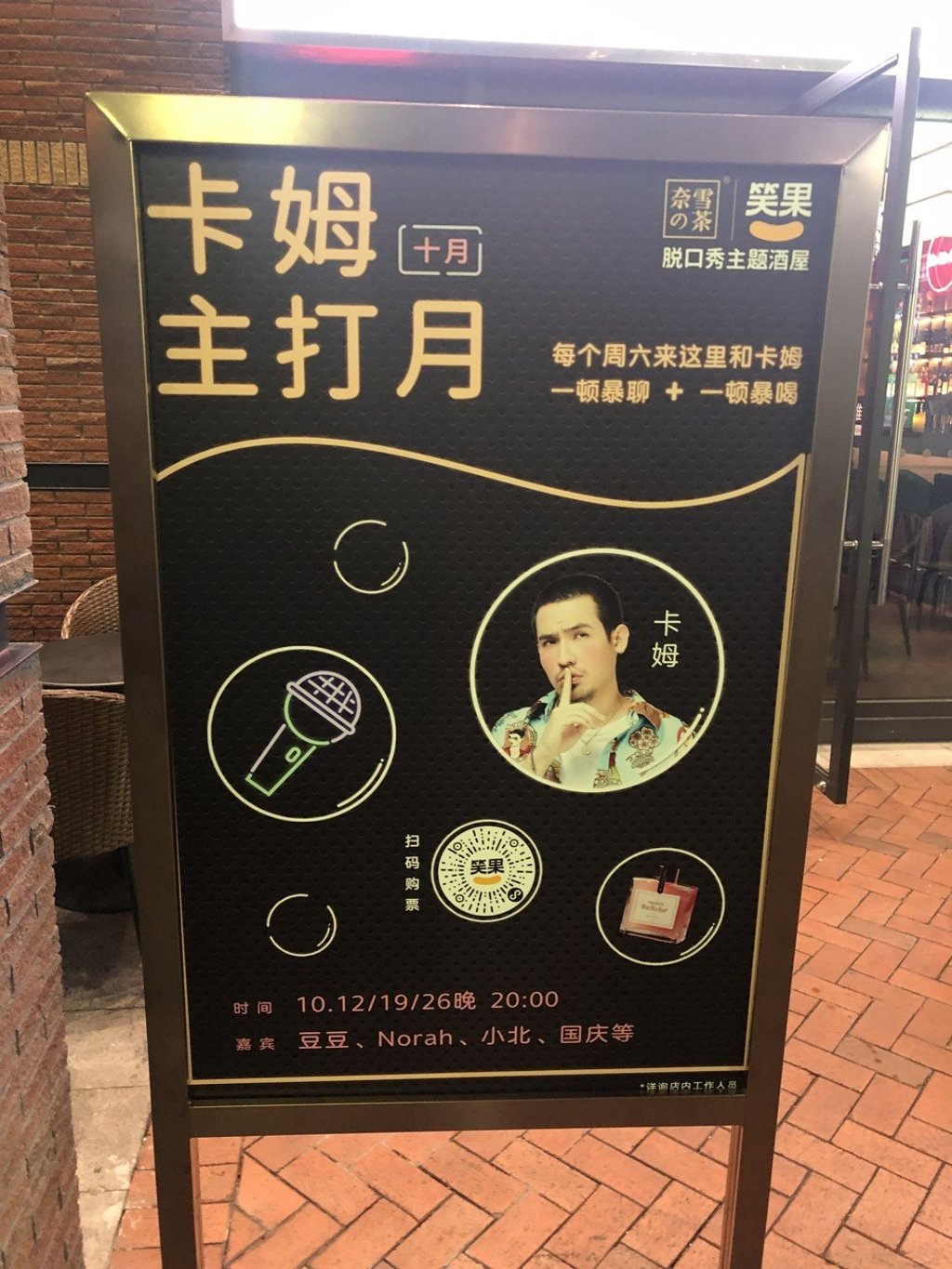
It’s Saturday evening. Nayuki, a teahouse-cum-bar on Dongfang Road in Shanghai’s Pudong district, is buzzing with activity. Dozens of young patrons have paid between 100 yuan (US$14) and 200 yuan each to watch Kamu, a rising stand-up comedian and the winner of the latest season of Rock & Roast, an online show that has clocked 2.33 billion views.
Since Nayuki introduced stand-up comics in September business has been booming.
The bar’s manager, who identified himself as Rex, said as the theme was a runaway success the owner was thinking of increasing the frequency of the stand-up shows to drive up business on weekdays as well.
“Night-time spending on food and beverages and some entertainment activities such as singing at karaoke parlours will eventually play a role in driving up the local economy,” said Eric Han, senior manager with business advisory firm Shanghai Suolei. “It is certain that an increasing number of people will flock to the landmark shopping streets at night as a result of herd mentality.”
Since July, the local governments of Shanghai, Beijing, Guangzhou and Shenzhen have unveiled a series of measures to stimulate night-time consumption in a bid turn their cities into world-class “nightlife capitals”.