ExclusiveVisitors stayed away, retail sales plunge. Protests took a harder toll on Hong Kong’s economy than Sars virus did in 122 days
- On seven of 10 economic yardsticks, today is worse than during the deadly Sars epidemic
- Property, employment have held up better during Sars – but the protests continue

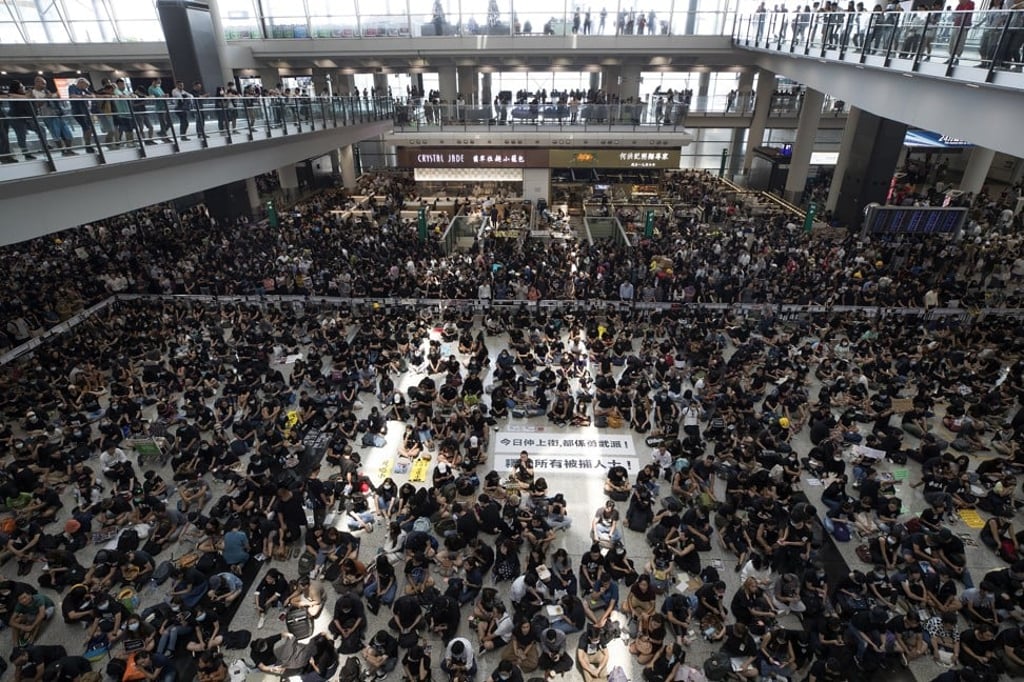
The day was August 12, just as Hong Kong’s worst political crisis in history was entering its second month, when protesters clad in black sat in the airport’s departure hall, preventing travellers from checking in. The main highway to the city was paralysed, as was the express rail link serving a transport hub that handles more than 65 million travellers every year.
It was unprecedented – a word that has come to define a city turned upside down by pent-up anger about its past and its future.
Some station exits of the city’s subway network operated by MTR Corporation were set ablaze. Shops, cafes, restaurants and bank branches that belong to mainland Chinese owners were vandalised and looted, in some cases set on fire.
Saturday marks 125 days since Hong Kong’s protesters stormed the local legislature on July 1, a public holiday to mark the return of the city’s sovereignty to China. Anti-government vandals laid waste to the Legislative Council’s chambers, spray-painting slogans and destroying public property.
What began on June 9 as an uneventful march by an estimated 1 million residents opposing a controversial extradition bill had descended into street mayhem involving frequent clashes between police and protesters. Police deployed tear gas, rubber bullets and water cannons, while radical protesters responded with fire bombs, rocks and more vandalism.