US and China regulators reopen some air routes, letting some carriers to fly again as they back off from aviation standoff
- Delta Air Lines and United Airlines Holdings were each allowed to mount two weekly services to China, as the Civil Aviation Authority of China (CAAC) yielded to US lobbying
- The US Department of Transportation responded overnight by doubling the number of Chinese flights to the US to four a week

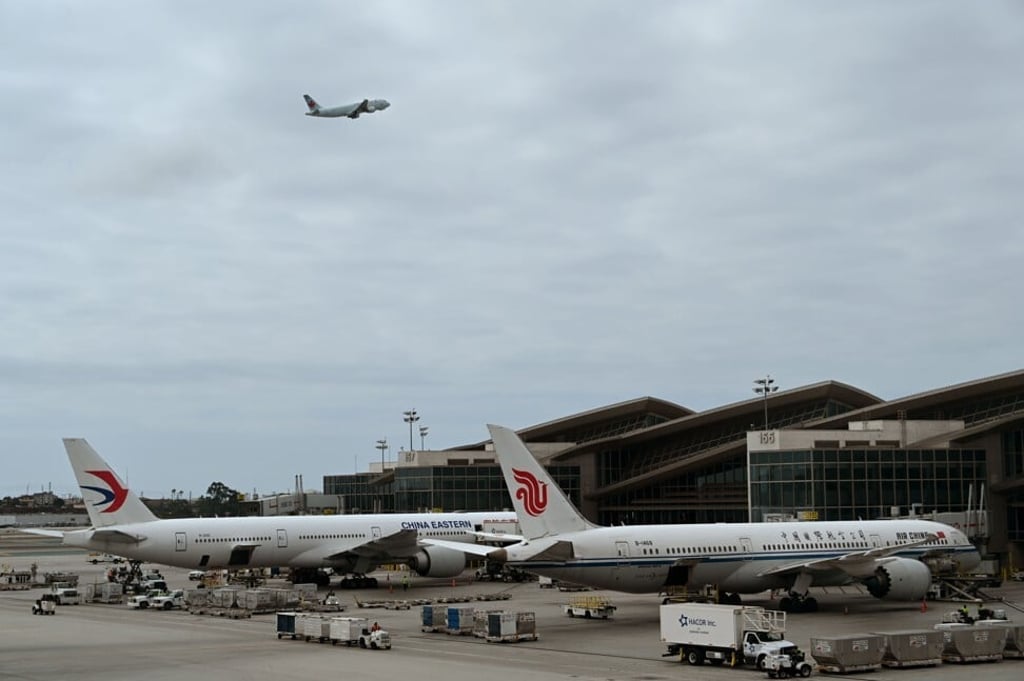
Delta Air Lines and United Airlines Holdings, the two largest US carriers by market capitalisation, were each allowed to mount two weekly services to China, as the Civil Aviation Authority of China (CAAC) gave in to US lobbying, Caixin reported without saying where it got its information. The US Department of Transportation responded overnight by doubling the number of Chinese flights to the US to four a week.
“As the Chinese government allows more flights by US carriers, we will reciprocate,” the American regulator said, adding that it would continue to pursue the full restoration of passenger air travel between the two nations.
“The focus of bilateral aviation policies had shifted to the US reluctance to open up demand because of perceived imbalances in the [reciprocal air rights], from the pre-coronavirus dialogue which mainly concerned procedures to further open up air rights and market share between the US and China,” said Yu Zhanfu, a partner at the consultancy Roland Berger in Shanghai. “In the short term there would not be big frictions on air right, but minor frictions may continue.”