Goodbye seems to be the hardest word for Europe’s manufacturers when it comes to China’s low-cost labour force and supply chain
- Already buffeted by US-China trade tensions, the European Union has stepped efforts to produce closer to home in the wake of the global pandemic, which is causing the steepest recession in almost a century
- While drugs and medical gear have been an immediate priority, the initiative is wide-ranging

European leaders talk of shortening supply chains and curbing China’s “Belt and Road” plan. But on the ground in Italy, Gimmi Baldinini says his designer footwear company is in no position to cut ties with the Chinese.
“Chinese workers have a better hand with gym shoes,” said the chairman of Baldinini, founded by his family in 1910 in northern Italy, where it still has the main production hub for the top segment of his goods. To produce sports shoes, the company relies on a Chinese plant in the Shenzhen area.
“Production costs over there are 75 per cent lower than in Italy. I can’t consider cutting them off and reshoring that particular production line,” he said. “Simply, there’s no other way, unless the Italian government decides to cut tax and labour costs dramatically.”
Already buffeted by US-China trade tensions, the European Union has stepped efforts to produce closer to home in the wake of the global pandemic, which is causing the steepest recession in almost a century. While drugs and medical gear have been an immediate priority, the initiative is wide-ranging.
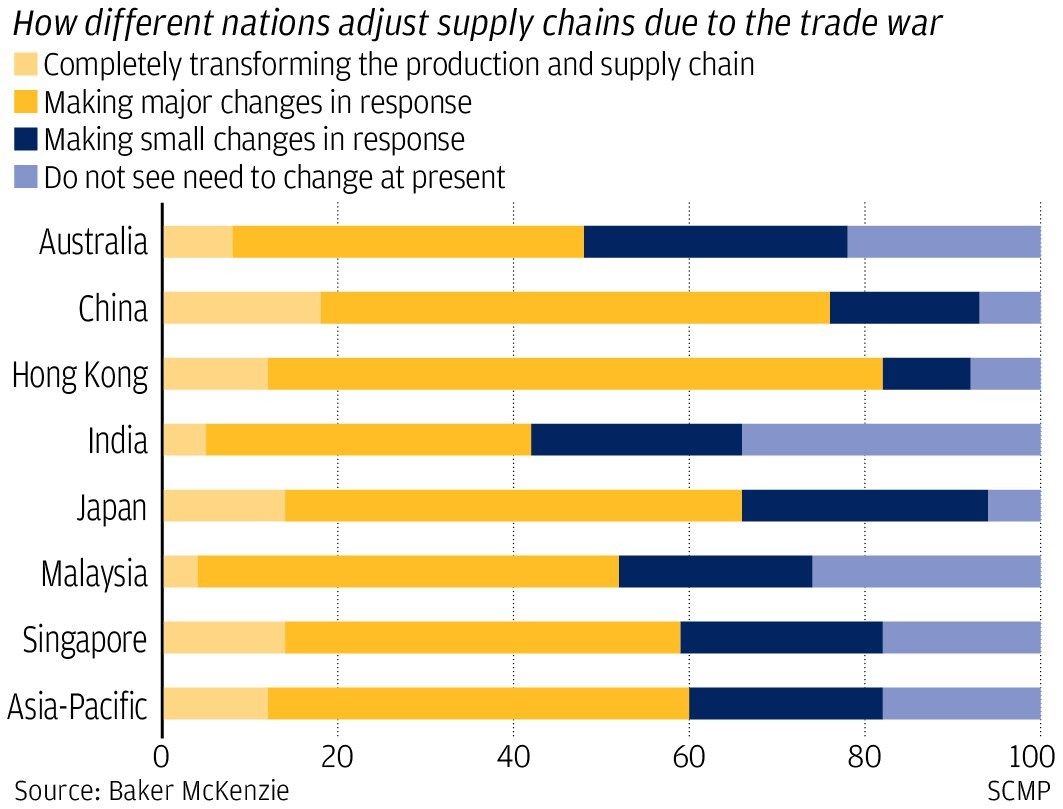
In an unusual foray into industrial policy, European Central Bank Executive Board Member Luis de Guindos and Dutch central bank Governor Klaas Knot have independently argued that companies should consider moving parts of their supply chains closer to home even if that meant higher costs. While the US may have voiced its concerns about China’s economic rise earlier and more loudly, Europe is seeking to thwart China’s expansionist policies, including using tariffs to try to curb the “Belt and Road” infrastructure plan.