Advertisement
Mainland-listed Hybribio involved in Hong Kong’s Covid-19 mass testing scheme eyes expansion
- Hybribio, the parent of Hong Kong Molecular Pathology Diagnostic Centre, said the volume of work was less than anticipated
- DNA samples from Hong Kong tests have not been sent to the mainland China, said director Kun Tit Sang
2-MIN READ2-MIN

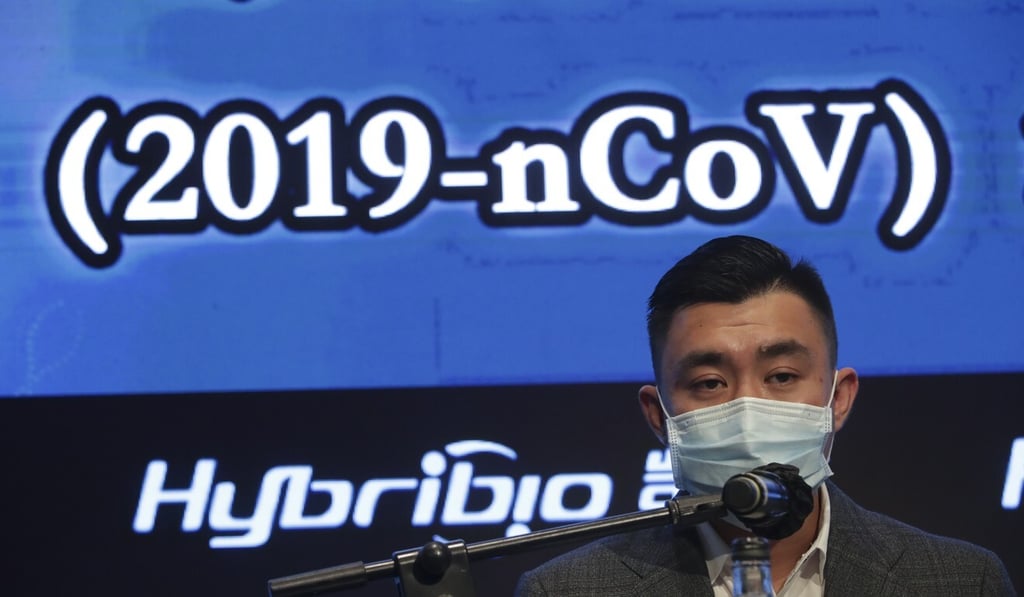
Hybribio, one of the three mainland Chinese biotechnology groups involved in the Hong Kong government’s Covid-19 mass testing scheme, plans to expand its operations in the city, a top executive said.
The company had been looking to grow its business in the financial hub even before the coronavirus pandemic, said director and vice general manager Kun Tit Sang, who oversaw the company’s operations during the two-week testing programme that ended on Monday.
“We’ve always been here and we were doing this anyway,” he said, adding that Hybribio will be hiring more staff, moving to a bigger office and expanding the scope of services, but stopped short of elaborating on the group’s plans.
Advertisement
A total of 1.78 million people were tested under the Universal Community Testing Programme. At least 42 Covid-19 carriers were identified among the quarter of Hong Kong’s population who voluntarily took part in the scheme. The numbers were far below the government’s estimates of five million, leaving the companies involved in the testing underwhelmed.
Advertisement
Hybribio’s Hong Kong Molecular Pathology Diagnostic Centre and two other subsidiaries of mainland Chinese companies BGI and Kingmed Diagnostics helped conduct the mass testing, which cost local taxpayers to the tune of HK$530 million (US$68.4 mllion).
“The work in Hong Kong was relatively easy,” said Kun. “Most of the diagnostic work was pretty much handled by our Hong Kong staff, because the Hong Kong lab has been around for eight years with very experienced staff.”
Advertisement
Select Voice
Select Speed
1.00x