China’s carbon neutral goal: Cainiao, JD.com and online retailers say all that mountain of plastics and packaging have to go
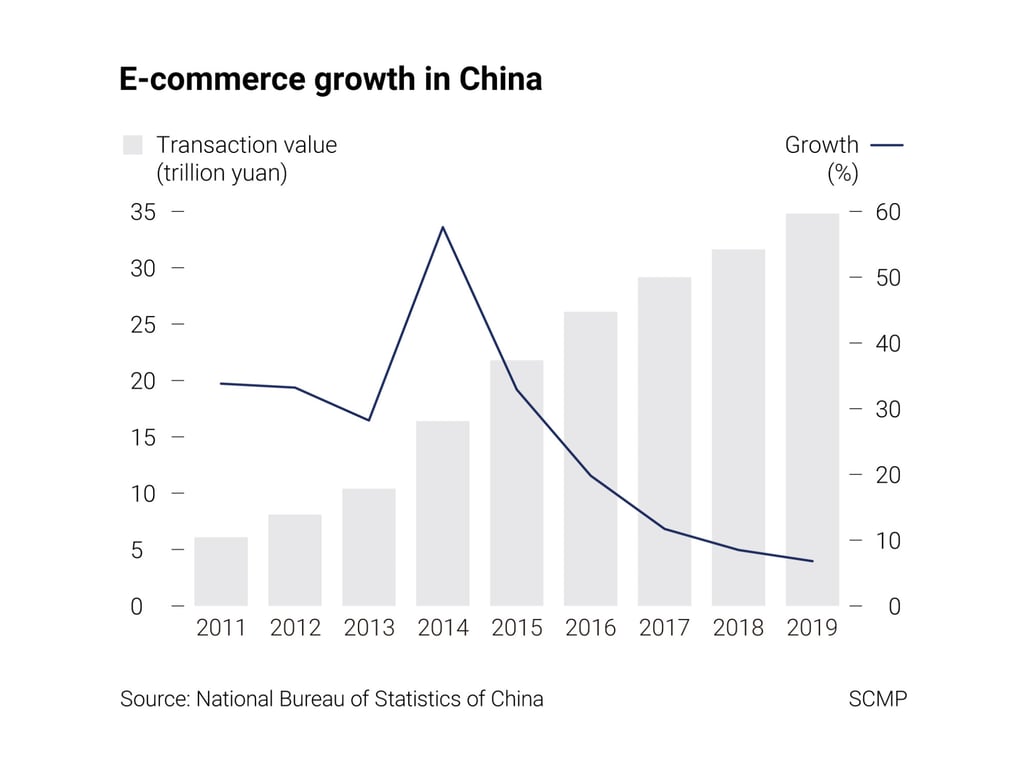
- As many as 67.1 billion packages were dispatched in 2020 in China’s online shopping industry, about 80 per cent of all parcels delivered around the country, according to an estimate by the State Post Bureau
- That number could balloon to 127.5 billion by 2025, leaving a carbon footprint equivalent to 116 million tons, or 1.1 per cent of China’s total emissions of greenhouse gases that year
Outside a residential compound in the Longhua district in southern China’s technology metropolis Shenzhen, home to some of the country’s most advanced companies, a quiet revolution is unfolding.
“A lot of boxes we collect are good for reuse, but we don’t need that many,” said the recycling station’s manager Wu Hui during a recent interview with South China Morning Post. “The rest go to the garbage collector, as do the wrappers, plastic foam, and plastic bags.”
As many as 67.1 billion packages of all sizes and shapes were dispatched in 2020 in China’s online shopping industry, about 80 per cent of all parcels delivered around the country, according to an estimate by the State Post Bureau. That number could balloon to a staggering 127.5 billion by 2025, leaving a carbon footprint equivalent to 116 million tons, or 1.1 per cent of China’s total emissions of greenhouse gases that year, according to a projection by CarbonStop, a Beijing-based consultancy.