Can Pop Mart turn viral hits into lasting icons? Molly and Labubu offer the answer
As Labubu’s meteoric rise cools, Molly’s longevity highlights the challenge Pop Mart faces in turning hype into stable intellectual property

Around a decade ago, aboard a train winding through China’s landscape, Wang Ning, the founder and chairman of Beijing-founded international art toy brand Pop Mart, shared with designer Kenny Wong Shun-ming the story of his early attempts at entrepreneurship.
As a fresh graduate, Wang struggled to sell affordable men’s suits sourced from Yiwu in Zhejiang province, eastern China, experimenting with small-scale arbitrage and learning first-hand how difficult it was to connect products with consumers.
The experience, Wong recalled, shaped Wang’s later understanding that branding and emotional connection could matter as much as the product itself. He later described spotting a Michael Jackson poster bearing the words “This is it” while job-hunting – a moment that crystallised that insight.
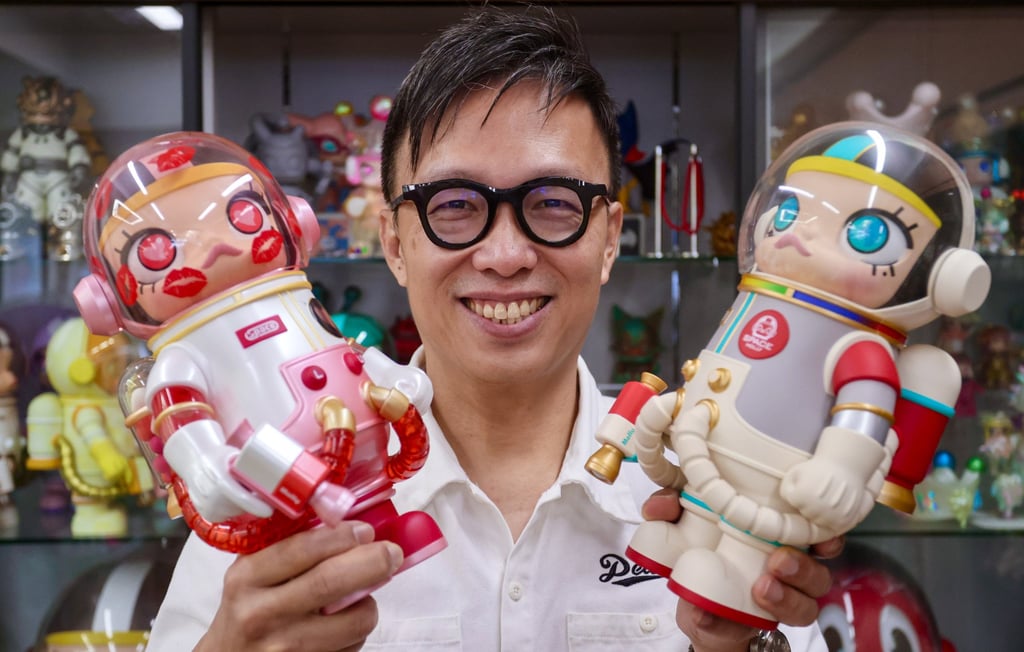
“Wang soon registered China’s first trademark (of ‘This is it’) and launched a Michael Jackson exhibition; a success that taught him the transformative power of branding,” Wong, the designer of the much-beloved big-eyed and pouty-mouthed character Molly, said in an interview with the South China Morning Post.
The company philosophy that emerged from this early experience – building products around story, identity and emotional connection – is now being tested.
As secondary-market prices for Pop Mart’s breakout figure Labubu fall sharply and the company’s shares swing more than 40 per cent from last year’s peak, the enduring appeal of its Molly doll offers a counterpoint.