China wants foreigners to help boost flagging stock market and push its opening agenda
Beijing’s new rule to allow foreigners living in the country to trade domestic shares directly for the first time comes amid a market slump and pressure from US attacks on its trade practices

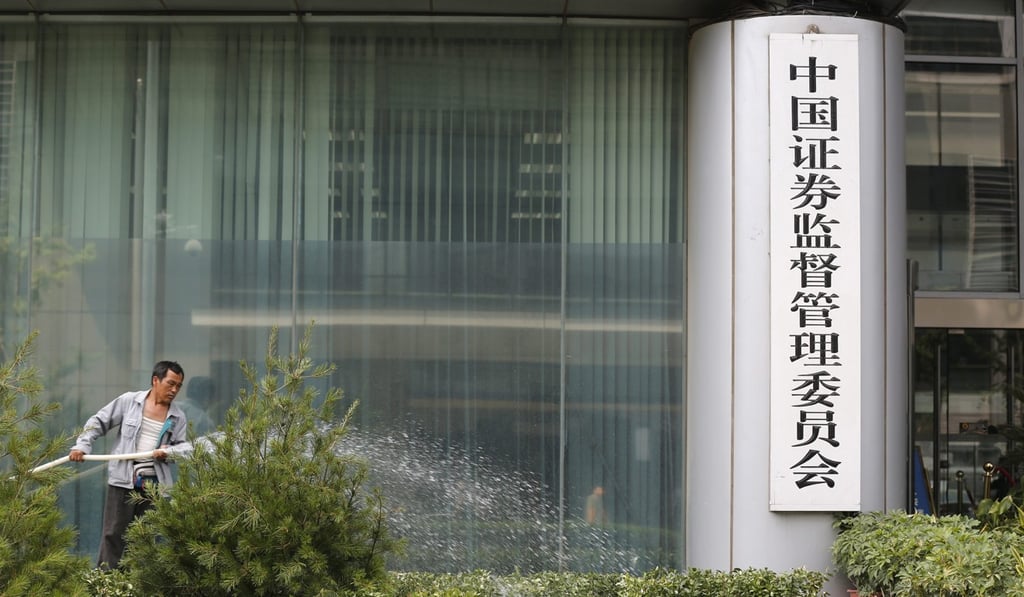
China’s decision to allow foreigners working in the country to trade local A shares directly for the first time comes as it looks to further open its closely guarded markets in the face of US trade pressure and a slowing economy, and to help a stock market that has fallen into its biggest slump in three years.
Yuan-denominated A shares will be open to individual foreigners working in mainland China and to overseas employees of companies that have issued A shares, the China Securities Regulatory Commission (CSRC) said on Wednesday. The change will give trading rights to around 1 million people and will go into effect on September 15.
Beijing has long pushed an agenda to open and internationalise its markets, initially allowing foreign institutions to trade A shares via the Qualified Foreign Institutional Investor (QFII) programme launched over a decade ago, and more recently through the Stock Connect schemes linking Hong Kong’s stock exchange with those in Shanghai and Shenzhen.
But liberalisation has become a more urgent issue of late as the US aggressively pushes back against what it calls China’s unfair trade practices.
“It is another important step taken by the Chinese regulators to internationalise the market,” said Ivan Li, an asset manager with Loyal Wealth Management. “It is a clear message that the country will further open the equity market following a series of liberalisations during the past years.”
At the same time, authorities are keen to boost a stock market that has struggled in the face of a slowing economy and a falling yuan currency, as well as the pressures from the US trade tariff onslaught.