At two years old, Shanghai’s Star board is already bigger than Spain’s capital market and shields investors from global tech rout
- The board, also known as the Science and Technology Innovation Board, entered its third year of operations on Thursday
- If treated as a stand-alone market, Star Market would be ranked 20th in the world, ahead of Spain’s capital market

The Star Market, China’s Nasdaq-style board, which is celebrating its second anniversary, has emerged as a safe haven for investors seeking shelter from Beijing’s crackdown on technology companies.
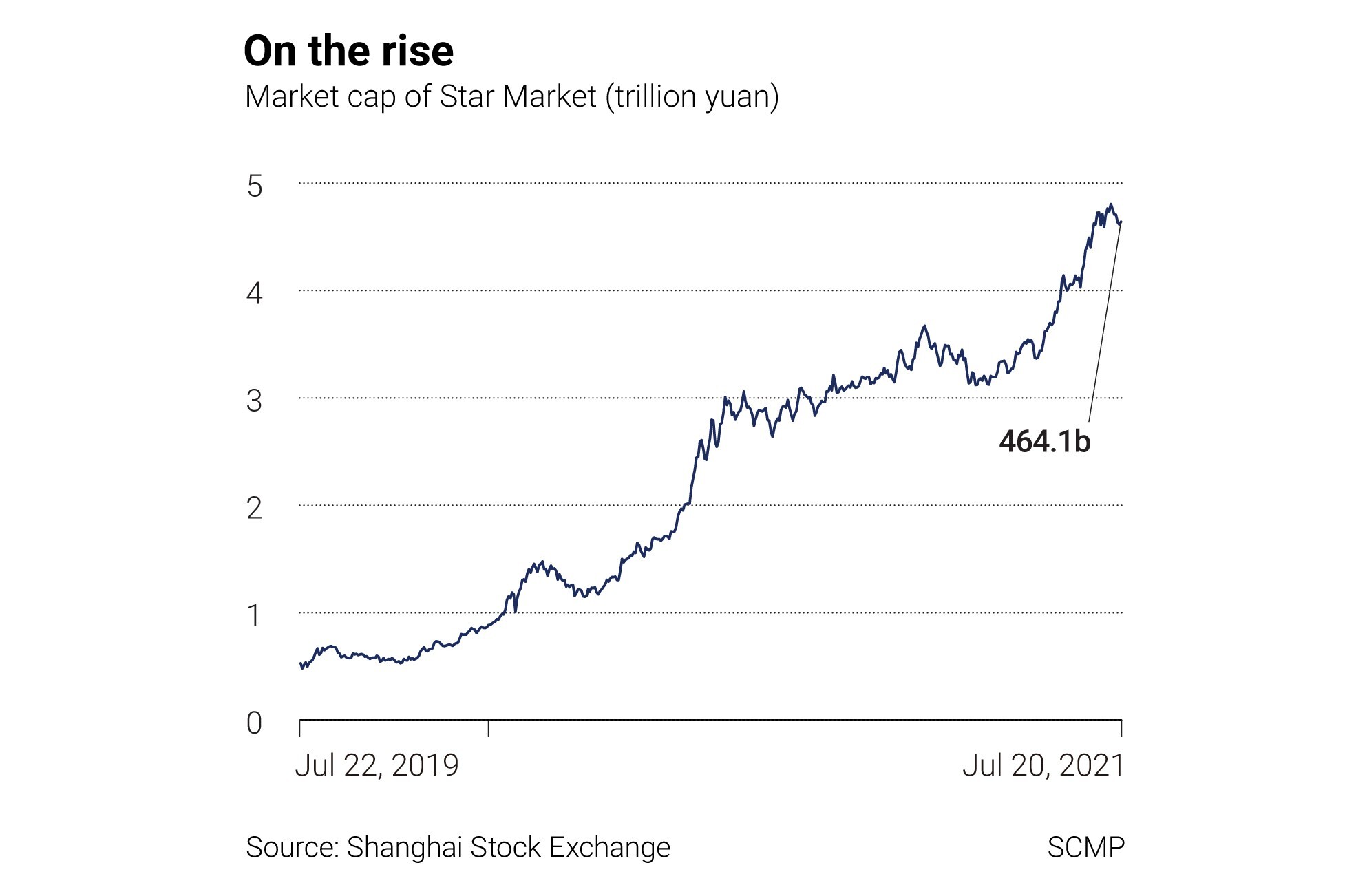
The board is the result of a direct push by Chinese President Xi Jinping, who mooted the idea at China’s first world import expo in 2018. Since trading commenced on July 22, 2019, listings on Star Market have ballooned to 311 from an initial 25, and their combined market value has grown to US$716 billion. If the board were to be treated as a stand-alone market, it would be ranked 20th in the world, ahead of Spain’s capital market, which is capitalised at US$704.7 billion.
China’s simmering tensions with the US and its latest edicts seeking to protect domestic users’ data have lifted the importance of Star Market, as the country needs a more efficient and well-functioning market to financially underpin technology firms and fend off the threat of an American technology blackout.
Moreover, the close scrutiny of Didi Global also signals top policymakers’ intentions of tightening their grip on overseas listings, potentially including those in Hong Kong, a move that could benefit Star Market.