China’s IPO flops from vaccine maker to retailer show growing pain as investors get a taste of listing reforms
- Nine companies traded below their listing prices over the past three weeks, while none before them suffered such embarrassment
- Shrinking returns from stock offerings and IPO flops will become more frequent, the Securities Daily said in a commentary

Nine stocks ended below their offer prices on their first day of trading in Shanghai and Shenzhen exchanges over the past three weeks. The worst of the lot is vaccine maker Liaoning Chengda Biotechnology, whose stock crashed 27 per cent. None of the more than 400 debutants this year that came before the nine had suffered such embarrassment.
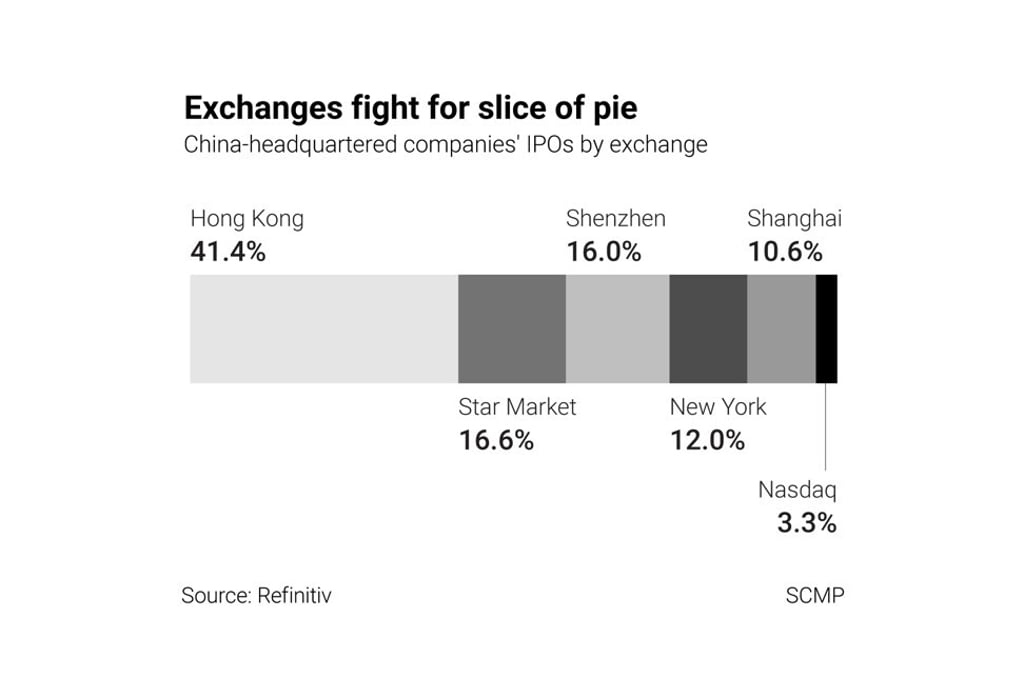
Investors can now wield more pricing power in the market in which companies raised more than 465 billion yuan (US$72.9 billion) from IPOs so far this year. That is a further boost to the registration-based system introduced in 2019, by waiving a cap of 23 times price-earnings on IPOs. The unwritten PE limit, however, still applies to companies seeking to list on the main boards.
“IPO subscription is no longer a risk-free deal,” said Lin Jin, an analyst at Shenwan Hongyuan in Shanghai. “Investors will need to strengthen research on stock fundamentals and be more serious in pricing. Institutional investors will need to reflect more of their professionalism and rationale in bidding.”
Liaoning Chengda Biotechnology, which makes rabies vaccine from its base in northeastern city of Shenyang, sank 27 per cent on October 28, after selling shares at 54 times earnings, versus the industry average of 38 times. Rumere, a clothing retailer, slumped 13.2 per cent on the same day.