Zhenjiang suicide-watch guard is the human face of the economic malaise that afflicts smaller cities amid the US-China trade war
- Jiangsu was 1.3 trillion yuan in debt by June, 2018, the highest among China’s provinces, and Zhenjiang is among the poorer cities in the province

As an out-of-work chemist inJiangsu province, Chen Wei thanked his lucky stars when he found employment as a security guard for China’s anti-corruption agency.
For 4,000 yuan (US$579) a month, Chen keeps watch with a colleague in six-hour shifts over detainees, some suicidal, who are awaiting investigation by the Communist Party’s organ for policing corruption.
The shift work, which pays a third less than his old job making plastic pellets, is mind-numbing – there’s no Wifi-enabled smartphones allowed, no internet, television, books or newspapers of any kind – but far from any hazardous fumes, toxic contamination or industrial accidents. There is even respectability and a hint of kudos in working for the anti-graft agency.
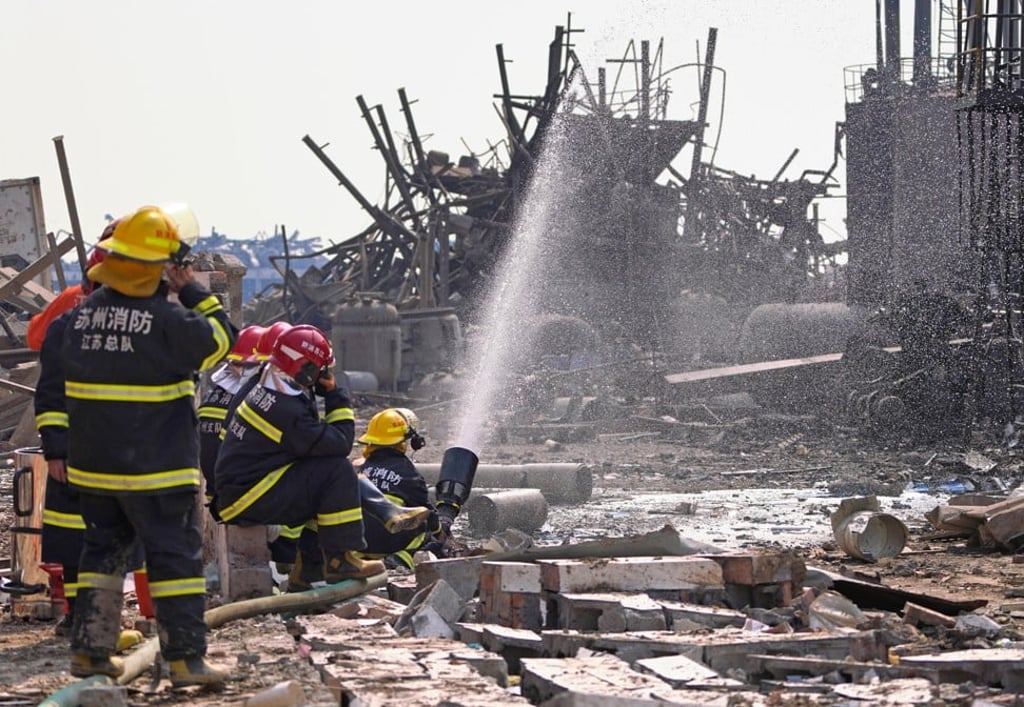
“I had to give up the former job out of safety concerns, especially since the bosses of local factories tend to meddle with machines to achieve unrealistically high production,” Chen said in an interview in Zhenjiang city, adding that, among other emotions, he felt a sense of vindication when an explosion at a pesticide plant in neighbouring Yancheng city killed 78 people in March.
“The pay in this new job, similar to an assistant policeman, is lower than before, but there are really not many options.”
Chen, 30, is the human face of an economic malaise that is slowly spreading through China’s small cities, which are caught between the slowest growth pace in three decades and a programme by the central government in Beijing to slash the debt owed by local authorities.