In the face of global hunger, Hong Kong must stop wasting food
Mayling Chan says Hong Kong people's habit of wasting food runs counter to the global goal to ensure a sustainable food supply for all, and we must do more to reduce and recycle our waste
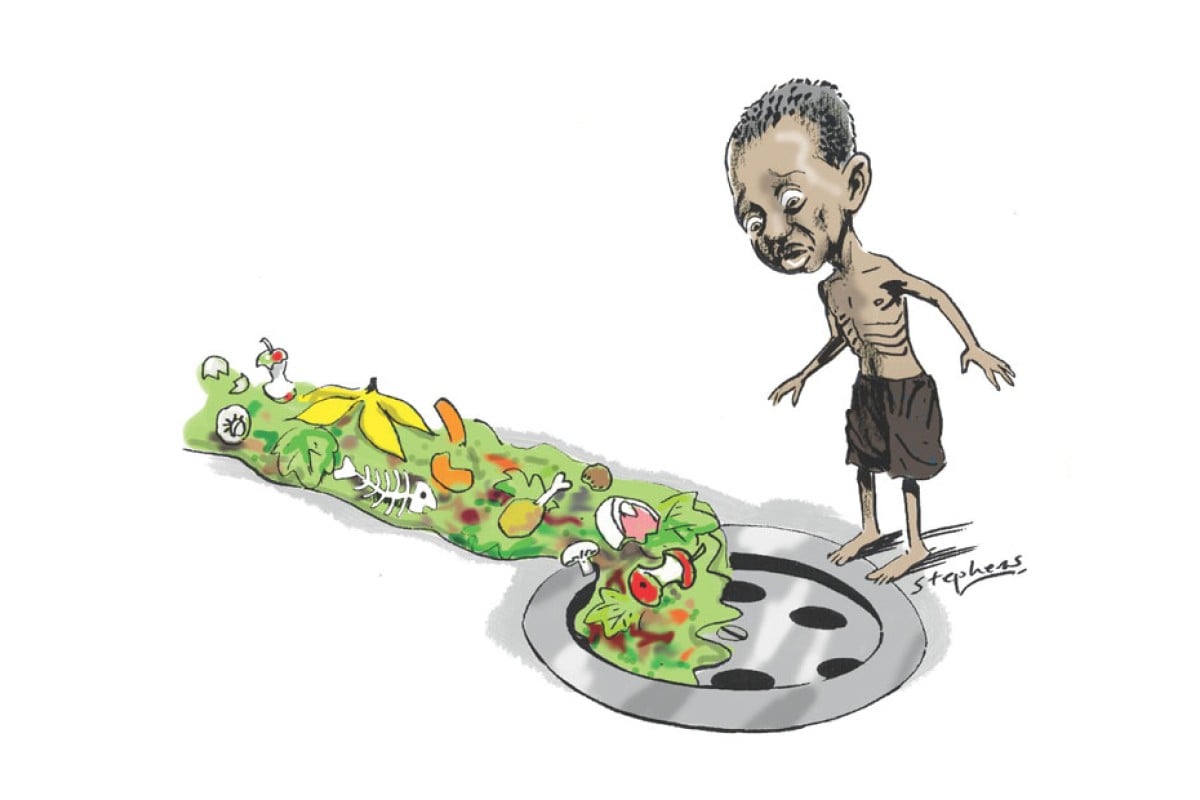
In Hong Kong, like any modern city that tends to rely on globally sourced imported food, it's hard to visualise the link between global issues of food insecurity and our own issues of food waste. The UN Food and Agriculture Organisation estimates consumer-based food waste in industrialised countries is almost as high as the total net food production of sub-Saharan Africa, that is, 230 million tonnes a year.
In fact, being able to control and reduce the volume of our food waste is a concrete way to contribute to global food security, which is characterised by the accessibility and availability of nutrition and food for all, through sustainable production, collection, distribution, marketing and equitable trade systems.
Having said that, modern cities have learned to be more self-sufficient in food provision over the past two decades. For example, farms have sprouted up in and around the city areas in Singapore, Havana, New York, Beijing, Caracas and elsewhere. Their purpose is to ensure greater adaptation to a world undergoing climatic changes that have affected production and crop yields.
The circular trend of local production and consumption supports the economy, which creates jobs
Overconsumption of food seems to have become a daily habit for many. The people of Hong Kong produce more than 3,500 tonnes of food waste every day. On average we consume 1.12kg of food a day, yet in every three-person household, about 1kg of food will end up in a landfill.
It is encouraging to see that a handful of people in our city are trying to close the food waste loop. We consume locally produced food: local pork is sold in markets in Sha Tin and Tai Po, for example; farmed fish is enjoyed by tourists and locals alike; and locally grown vegetables are sold in agricultural markets that have sprung up in many districts, including commercial areas like Central and Taikoo Place.
This circular trend of local production and consumption supports the economy, which creates jobs. On top of this, it promotes a culture of resilience for our food and trade systems at all times, and a feeling of community, which celebrates the actions and culture to grow, rather than waste.
Few of us perhaps have a clear picture of how the people of Hong Kong can grow food, including raising small livestock. As of March 2012, there were 1,872 vegetable farms covering 415 hectares that were registered under a government scheme in Hong Kong. There are many more that have not registered that are scattered around on outlying islands, in food gardens and on the rooftops of many buildings across the city.