Advertisement
Xi Jinping's UK state visit
Opinion

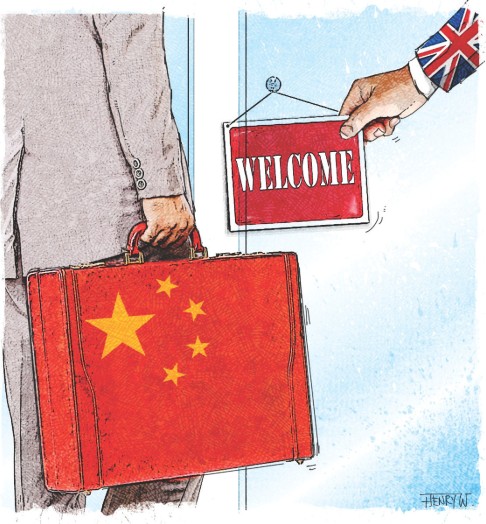
Expect bilateral deals and economic cooperation to feature in Xi Jinping's visit to Britain

Andrew Hammond says the UK knows getting on China's good side is in its own best economic interest

4-MIN READ4-MIN
Both Beijing and London are - rhetorically at least - hailing the visit as signalling a new "golden" era in bilateral relations.
Andrew Hammond
Both Beijing and London are - rhetorically at least - hailing the visit as signalling a new "golden" era in bilateral relations.
This Tuesday, President Xi Jinping begins a historic four-day trip to the United Kingdom. It is the first state visit by any Chinese president in a decade and both Beijing and London are - rhetorically at least - hailing it as a new "golden" era in bilateral ties.

The pomp that Xi will be afforded is underlined by the fact that he will be feted at Buckingham Palace, Downing Street, Chequers (the country home of the UK prime minister), and the Houses of Parliament. This will offer a genuine five-star, red-carpet treatment for the Chinese president in a way designed for maximum public relations effect.
For all that Beijing may be the more powerful partner, it is currently grateful to the UK government for placing such faith in the country at a time of mounting concerns about its health

Indeed, the UK Chancellor of the Exchequer George Osborne and leading potential successor to Prime Minister David Cameron has even pledged to make Britain "China's best partner in the West". This appears to be a concerted ambition for Osborne, personally, and has already ruffled the feathers of Washington following the UK's decision to become a founder member of the Asian Infrastructure Investment Bank (AIIB), which is being championed by Beijing as a potential alternative to the World Bank.

Advertisement

An unnamed senior Obama administration official was widely quoted in March to be "wary about a trend toward constant [UK] accommodation of Beijing, which is not the best way to engage a rising power". Meanwhile, an official White House statement urged London to "use its voice [in the AIIB] to push for adoption of high standards".
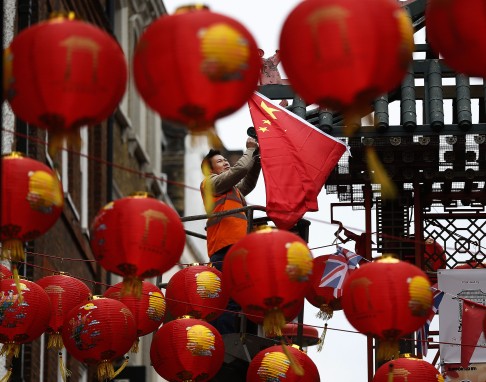
London's Chinatown being spruced up ahead of Xi's visit. Photo: AP
Advertisement

The most important element of the "new" bilateral relationship is economics. And with the visit of Indian Prime Minister Narendra Modi in November too, the UK government's key message to the outside world appears to be that the country is "open for business". In so doing, Osborne and Cameron have ratcheted down, in public at least, their human rights concerns about China, especially after bilateral relations temporarily went into a deep freeze in 2012 when the prime minister met with the Dalai Lama.

While this is not without controversy, including with Labour Party's new leader Jeremy Corbyn, who has promised to discuss human rights with Xi when they meet, there is a relatively broad political consensus in London that enhancing ties with Beijing, albeit not in an unqualified way, is in the UK national interest. Xi could be in power until the early 2020s, and, especially after the depths of the 2008-09 recession, it is widely viewed in London that there is an opportunity to develop a relationship that could make a significant contribution to UK prosperity for a generation to come.
Advertisement
Select Voice
Select Speed
1.00x