Advertisement
Hong Kong weather
Opinion

The folly of Hong Kong’s reclamation plans amid rising sea levels and storm surges

Martin Williams says the proposals for exposed artificial islands for an incinerator and the East Lantau Metropolis ignore the increasing danger of extreme weather due to climate change, but politics clearly takes priority over science

3-MIN READ3-MIN
Storm clouds seen from Cheung Chau a day after Typhoon Hagupit passed 200km south of Hong Kong. Photo: Martin Chan
Martin Williams

In its 2015 annual report, the Planning Department noted that, due to climate change, Hong Kong is forecast to experience a significant increase in the frequency and intensity of extreme weather events such as tidal surges and typhoons, and that “sea levels will continue to rise for decades”.

So, what kind of projects is Hong Kong planning in the face of such threats? Reclamation! And not just the third runway, in an area somewhat sheltered by Lantau, but artificial islands for an incinerator beside Shek Kwu Chau and the grandly titled East Lantau Metropolis – both of which will be exposed to the brunt of typhoon waves and storm surges.
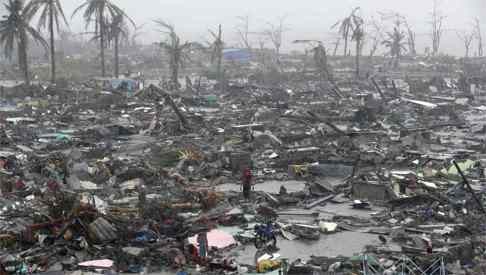
Survivors stand among the ruins of houses destroyed after Super Typhoon Haiyan battered Tacloban city in the central Philippines. Photo: Reuters
Perhaps this doesn’t seem so bad, given that, of late, Hong Kong has received little more than glancing blows from typhoons, and the term “storm surges” seems almost innocuous. Yet storm surges can be akin to tsunamis that are accompanied by monstrous waves driven by hurricane-force winds. In November 2013, the world was shocked by images of the damage Super Typhoon Haiyan wrought in the southern Philippines, mostly caused by the sea surging to six metres above normal. Houses were smashed to smithereens and at least 6,300 people were killed.
In Hong Kong, strong storm surges probably killed over 10,000 people in 1906 and 1937

Based on historical records, the dubious honour as the part of East Asia worst hit by storm surges goes to the Pearl River Delta, including Hong Kong. Reports date back to the year 1245, when a typhoon surge killed perhaps 10,000 people around the delta; the highest death toll on record is 80,000, in 1862. In Hong Kong, typhoons with strong storm surges probably killed over 10,000 people in 1906 and 1937.
Advertisement
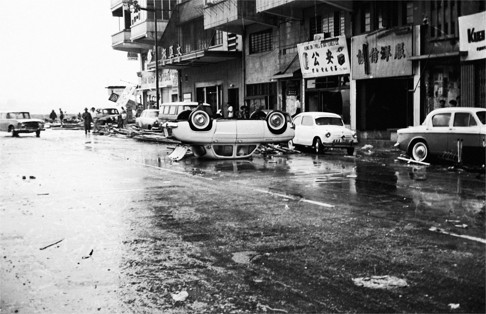
The aftermath of Typhoon Wanda in Wan Chai in 1962. Photo: SCMP Pictures
The last destructive storm surge was driven by Typhoon Wanda in 1962. The Tai Po area was hard hit, but even in Victoria Harbour, huge waves pounded against sea walls and hurled 500kg chunks of masonry that smashed shop fronts on Gloucester Road.

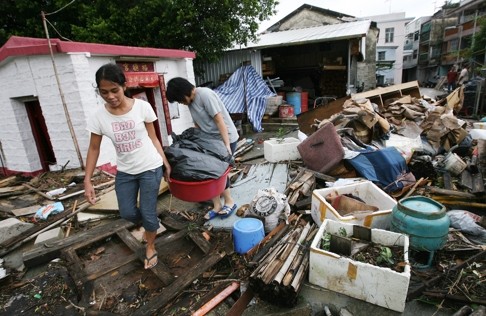
In 2008, after Typhoon Hagupit caused a surge in southwest Hong Kong despite being 200km away, I saw damage on Lantau and Cheung Chau – including a beach store’s metal security shutter bashed inwards and benches snapped off steel supports. And I realised that along Hong Kong’s south-facing coasts, long-established settlements are away from shorelines, probably to avoid storm surges.
Advertisement
Residents of Tai O clear up debris after Typhoon Hagupit struck Hong Kong, resulting in serious flooding in the town. Photo: Sam Tsang
Yet now, planners aim to create new islands in places exposed to surges and storm waves. And these plans have been made even as storms are evidently worsening and sea levels are rising.
Advertisement
Select Voice
Select Speed
1.00x