Despite hefty transport investment, China’s flight delays are here to stay – for now
Xiaowen Fu says Beijing’s massive investment in airports and high-speed railways is paying off, even though some congestion is inevitable


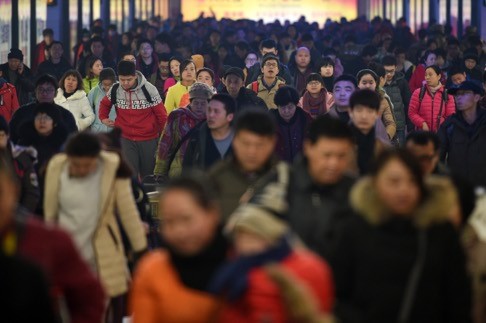
Such a surge in travel volume puts tremendous pressure on the nation’s transport infrastructure, leading to enormous congestion and delays at a time when they are least desirable. At large airports such as Shanghai’s Hongqiao and Shenzhen’s Baoan, close to half of all flights were delayed by more than 30 minutes.
In view of China’s slowing economy, would it be a good idea to increase investment in key transport infrastructure such as rail and airports?
Even at the best performing airports, such as Kunming ( 昆明 ) and Qingdao (青島), about 30 per cent of flights were delayed. Newspaper headlines such as “Homebound passengers trapped on road” or “Emotional passengers go on riot at airports after delays” are common.
Is there any way of addressing this annual transport chaos? In view of China’s slowing economy, would it be a good idea to increase investment in key transport infrastructure such as rail and airports?
Of course, China is not alone when it comes to congestion. In the US, at Chicago’s O’Hare airport, for example, more than 28 per cent of all flights were delayed in 2014, with an average departure delay of nearly an hour. It is easy to understand why the US Department of Transportation has identified reducing congestion as its No 2 management challenge, second only to aviation safety.
READ MORE: Chinese New Year travellers opt for rail as more snow arrives