Why not period leave for women? Hong Kong should consider women’s needs to keep them at work
Paul Yip says an empathetic workplace is a productive one, and there’s no reason why Hong Kong can’t take its cue from a British company’s proposed leave for menstruating women, among other family-friendly measures

Coexist, a large community and arts centre in Bristol, employs 31 staff, only seven of whom are men. It will be the first company in Britain to allow female employees menstrual leave. According to the director, Bex Baxter, it makes sense to allow women employees to take advantage of their natural cycles rather than fight against them. She reckons that by providing time out for women during menstruation, they will do even better after the leave.
Taiwan and South Korea have laws allowing women time off when they have their period
Menstruation still seems to be a taboo for many young women, based on our Family Planning Association of Hong Kong youth sexuality study. Sometimes, they feel ashamed to admit they are in pain. The proposed period leave in the UK is an opportunity to raise public awareness of the issue and reduce the social stigma associated with it.
Menstrual leave was first tried in Japan in 1947. Countries including Taiwan and South Korea have laws allowing women time off when they have their period. I think this awareness helps both men and women become more empathetic to one another. This policy initiative can create a positive approach to menstruation that empowers women and men to support the effectiveness and well-being of the organisation.
Hong Kong is known to be an efficient society. At the same time, it has one of the lowest fertility rates in the world – 1.2 births per woman – compared with the rate of between 1.7 and 2.1 per woman in most Western countries. Yet, Hong Kong women’s workforce participation rate is very low, at 49 per cent, versus 60-80 per cent in the West.
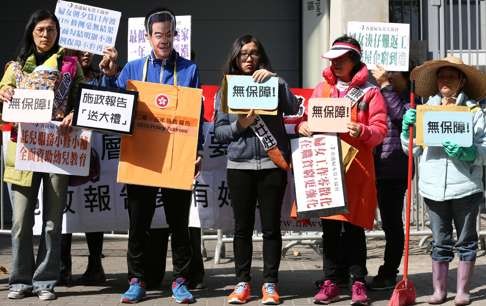
Not enough being done for Hong Kong’s working women, says association
Women who want to pursue a career or simply improve their living conditions by earning a wage often find they need to compromise their aspiration to have a family. They either delay their marriage and/or have fewer children. Apparently family formation and career development for Hong Kong women are two competing forces, which is detrimental to their well-being. Achieving one and losing the other does not make them happy at all.
Some employers are still reluctant to make the workplace more family-friendly
Some employers are sadly still reluctant to make the workplace more family-friendly. Due to continual improvement of education opportunities for women, female undergraduates outnumber their male counterparts and more women are to be found in professional bodies today. An unsupportive working environment is sometimes the cause of human resource wastage and shortage. Our work environments need to be further improved to attract women to stay in the workforce to meet the anticipated labour shortage from 2018. The government has invested so much in education and our university graduates. Creating a more supportive environment to keep women at work is for the good of our whole society.