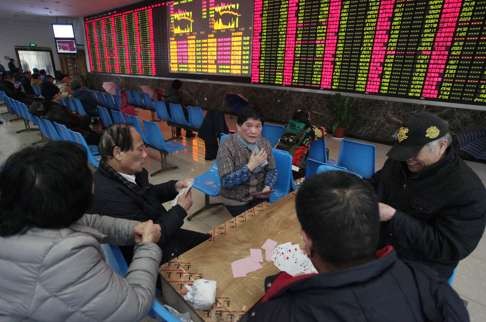
China, Hong Kong and other debt-laden economies risk a major financial crisis
Erik Norland says the world should have learned about the risks of excessive debt, but just as the US and Europe spent time lecturing Japan while repeating the same mistakes themselves, a number of countries – including China – have now levered up dangerously

When a country’s total debt – public plus private – approaches 250 per cent of GDP, financial crises seem to take root. This was the case for Japan in 1989, the United States in 2007, and for many European countries in 2009. China and Hong Kong, Australia, Canada, Singapore, South Korea and a number of other countries have now chalked up similar levels of debt relative to the size of their economies.
When debt levels are low, governments, households and corporations can live beyond their means by borrowing money. Debt-fuelled spending in excess of income expands GDP as spending by one is income for another. As debt levels rise, however, the nature of borrowing changes. At higher levels of debt, more money goes towards refinancing existing debt instead of spending. In turn, growth slows. When total debt levels become too high, either borrower or lender eventually becomes nervous and turns off the tap, causing a loss of confidence. This then threatens to send the debt-fuelled economic expansion into a reverse spiral.
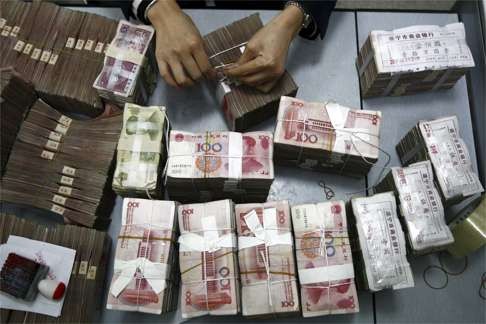
Xi Jinping, China’s debt time bomb, and the art of saying nothing
One might have thought that countries around the world would have learned from the experience of Japan, the US and Europe about the dangers of excessive leverage. However, this doesn’t appear to be the case. Just as the US and Europe spent much of the 1990s and 2000s lecturing Japan while repeating Japan’s mistakes themselves, a number of countries appear to have levered up dangerously in the wake of the American and European financial crises.
These countries include Australia, Canada, China (and Hong Kong), Norway, Singapore, South Korea, Sweden and Switzerland. Countries that have achieved high levels of leverage recently may be at a heightened risk of suffering a major financial crisis during the next several years, although the timing of any such crisis is difficult to determine.
Of these countries, China is of greatest concern. Its GDP has grown to over US$10 trillion, roughly five times as large as its fellow BRIC economies of Brazil, India and Russia, taken individually, but still smaller than the US or the European Union. If China experiences a major financial crisis, commodity prices could spiral even lower. Ominously, in March, China’s total debt added up to 249 per cent of GDP, composed of a small public debt (44 per cent of GDP), a modest household debt (39 per cent) and a crushing corporate debt of 166 per cent. These numbers are reminiscent of the US and UK in 2007, and Ireland and Spain in 2009, but with less household debt and more non-financial corporate debt.