With the Trans-Pacific Partnership all but dead, what next now for world trade?
Jean-Pierre Lehmann says if global trade is not to fall into disarray, the TPP, which has been problematic from the start, must be replaced by a wide-ranging new agreement


I asked the American official if he could tell me whether any of the US presidential candidates had spoken out in favour of TPP. Hillary Clinton, it will be recalled, sensing which way the political winds were blowing, withdrew her support and indicated she would oppose it. This position was reinforced in the negotiations that ultimately culminated in Bernie Sanders’ endorsement. Donald Trump’s position on TPP, as well as on trade in general, is well known. I could not remember whether, out of the plethora of other Republicans who fell by the wayside, any had championed the pact. As I did not get an answer from the official, I presume the answer is no.
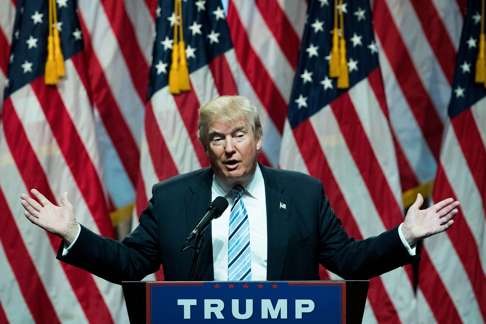
Trump rips up Republican trade orthodoxy, saying he will cancel TPP treaty and brand China a currency manipulator
I asked the EU official the same question regarding European national leaders over the transatlantic pact. The only possible candidate might have been David Cameron, but since the Brexit vote has happened, that pretty much put the final nail in the coffin of the transatlantic pact.
The deaths of both agreements are due to a number of causes. There are similarities between the two. However, since the TPP has far greater geopolitical significance, the focus will be on TPP.
Whereas in the old GATT days, trade was not a political issue, it has become quite dramatically so
First, a bit of perspective. Perhaps one of the greatest paradoxes of the 21st century is that while merchandise trade has boomed since the conclusion of the General Agreement on Tariffs and Trade (GATT) Uruguay Round in 1994 and the founding of the World Trade Organisation in 1995, global trade governance is in a state of disarray.
This is due to the numerous new actors on the global trade stage, especially the mammoth new kid on the block, China. GATT was a comfy club of rich nations, directed by the so-called Quad – the US, Canada, the EU and Japan. To them the new players appeared as uppity interlopers. The attitude was that if they want to play on “our” stage, they will have to abide by “our” rules. This is leaving aside the fact that the countries of the Quad did not first establish rules and then become powerful and prosperous, but the reverse: first, plunder, then establish the rules to prevent new actors from doing the same.