A shot at cross-strait diplomacy: Can Tsai Ing-wen turn the missile misfire crisis into an opportunity?
Zhou Bo says the misfired missile, while showing how precarious peace can be in the Taiwan Strait, offers a chance for the island’s new president to reach out to Beijing and rebuild trust

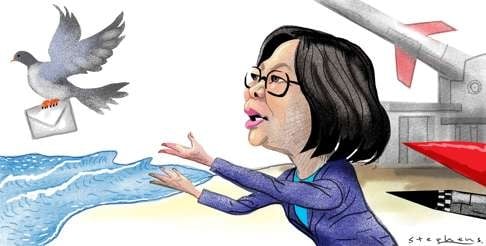
Appalled Taiwanese media hyped up how the mainland could have retaliated with showers of missiles, if the stray one had hit anywhere on the other side of the Taiwan Strait.
Taiwan launches investigation into deadly navy anti-ship missile misfire
This shows how precarious peace can be across the strait. Compared with situations around the Diaoyu Islands and in the South China Sea, few would describe the Taiwan Strait as dangerous. During the meeting between Xi Jinping (習近平) and Ma Ying-jeou in Singapore, Ma declared that the strait was more peaceful than at any time since 1949. However, the stray missile reveals how, in life, the seemingly impossible can suddenly become possible in a dangerous way. The fact is that, of all the wars in history, almost a third were triggered by accidents that were misread.
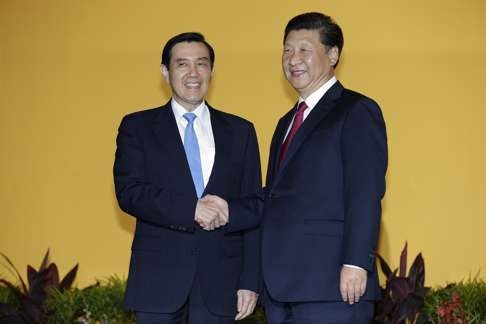
Beijing maintains that [cross-strait] exchanges can only be conducted under the ‘one China’ principle which ... Tsai has so far dodged
This is in sharp contrast with the military hotlines China has established with Russia, the US, South Korea and Vietnam. There is even a video link between the Chinese and the US military. And, in spite of the Diaoyus dispute, China and Japan are negotiating a maritime and air liaison mechanism.
The mainland is distrustful of Tsai, with good reason. Her “green camp”, the Democratic Progressive Party, is pro-independence. She was one of the chief drafters of the “special state-to-state relations doctrine” of former Taiwanese leader Lee Teng-hui, which describes the mainland and Taiwan as special but equal states across the strait. Her remarks on the 1992 Consensus on “one China” at her inauguration ceremony were shrouded in studied ambiguity, which the mainland has refused to buy.