Why Ricky Wong’s bid for a free-to-air TV licence really failed
Luke Tsang says ire directed at the chief executive is misplaced, as broadcast licence decisions are always political and assuaging Beijing’s fears with an ‘appropriate’ board is crucial

In the eyes of most Hong Kong people, Ricky Wong Wai-kay’s failure to obtain a free-to-air TV licence was a “political decision”, and “a decision by one individual”. Wong became so angry that he vowed to topple that “individual”. But is that the reality?
Back on the attack: Hong Kong media maverick Ricky Wong shrugs off poll defeat and focuses on new battle ground to stop chief executive
Over my almost 40 years working in the media, I have gained some insights into the way the industry works. The issuing of free-to-air TV licences in Hong Kong has never been decided solely by the city’s top decision-maker (that is, the governor in the colonial past, or the chief executive at present). It must come with the “blessing” of the ruler of the sovereign state (Britain in the past; now China) because airwaves can be very influential (especially in the days before the internet). Any government would only issue TV licences to people it trusts – this unspoken rule applies to countries such as the US, Britain and Canada, and in Europe, where free speech has always been emphasised.
Did [Wong] not understand the rules of the game or receive expert advice on the matter?
So, issuing a broadcast licence will always be a political decision, rather than a commercial one.
When making the decision, the authorities will check the licence applicant’s background, and the most important consideration is the “political correctness” – rather than commercial capability – of the applicant. Therefore, the licence applicant must know how to assemble a team of “appropriate” board directors – to make those in power feel comfortable when they issue the licence.
For example, when Television Broadcasts applied for a free-to-air TV licence decades ago, its board of directors was trusted by the British government. They included Sir Run Run Shaw of Shaw Group, Harold Lee Hsiao-wo of the Hysan family, Andrew Eu Keng-wai from the Eu Tong-sen family, Sir Douglas Clague, a highly respected British taipan and, finally, ITV from Britain and NBC from the US. With such a strong line-up, how could a broadcast licence not be issued?
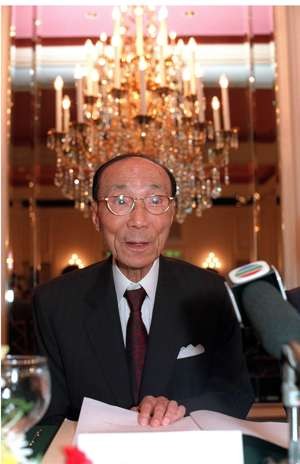
And, when Commercial Television applied for another licence, its top team included George Ho Ho-chi from the Hotung family, Jardine Matheson Group (representing British interests) as well as three press groups of pro-government newspapers: Sing Tao Daily, the Kung Sheung Daily News and Wah Kiu Yat Po (or Overseas Chinese Daily News).
How about radio broadcasting? When Metro Radio was formed in 1991, its broadcast licence applicants included shareholders Li Ka-shing of then Hutchison Whampoa, Raymond Chow Man-Wai of Golden Harvest Group, Dickson Poon of Dickson Group and international radio veteran Craig Quick. When everyone saw the line-up, who could say no?