Whether its president Trump or Clinton, Asia needs to prepare for the good, the bad and the ugly
Jesse Friedlander says the region has many reasons to closely watch the outcome of the US presidential election, with trade and security at the top of the list

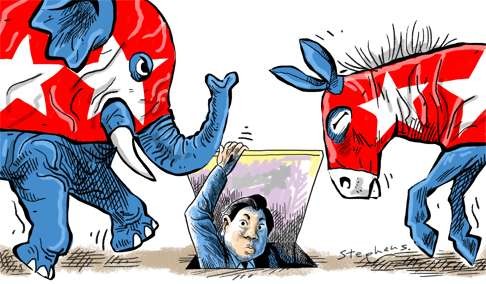
On economics, trade forms the foundation of Asia’s relationship with the US. Each year, Asia’s export-oriented economies, led by China, Japan and South Korea, ship US$1 trillion of goods to the United States. An expansion in trade relations had been expected as a result of the Trans-Pacific Partnership agreement signed last February by 12 Pacific Rim countries. While the TPP is scheduled to come into effect by 2018, the dynamics of the electoral campaign were such that both Clinton and Trump voiced opposition to the deal on the basis that it is not in the interests of the American worker.
Why Hillary Clinton’s wavering on TPP could be nail in the coffin of Barack Obama’s ‘Asian pivot’
A president Trump would probably take a more adversarial stance in negotiations for the trading relationship and present a greater risk to Asian companies operating in the US. We can expect Asian businesses to struggle to grow exports to the US, no matter who wins, because trade with Asian nations is specifically seen as having a harmful impact on domestic manufacturing. To appreciate the international reverberations of potential shifts in US policy one need look no further than Mexico, where the peso has fallen precipitously over the past year. This loss for assets valued in pesos provides vivid evidence of how markets can react. Trump’s improved prospects of winning the election and then adopting a tougher stance towards Mexico has already been priced in.
The degree to which the winning candidate can achieve an amicable and pragmatic relationship with China will directly impact peace and economic growth in the region
On defence and security, rising military tensions in Asia over disputed territories will inevitably draw the attention of the new president. US-China relations provide the backdrop for intra-Asia stability and regional cooperation. The degree to which the winning candidate can achieve an amicable and pragmatic relationship with China will directly impact peace and economic growth in the region. If the two countries become rivals, we are likely to face increasing militarisation and resulting negative consequences. If countries decide to reduce their reliance on the US, they would need to boost defence spending to protect themselves from potential aggressors, which will benefit military equipment providers. Moreover, if the US alliance structure in Asia begins to fray, we should consider the possibility of a transformation – if not large-scale destabilisation – of the region’s political and economic landscape.

Trump promises huge boost in military spending, before a close encounter with Clinton
As secretary of state, Clinton oversaw the famous pivot towards Asia and away from the Middle East. This has led to a more active US military presence in the region and reassurance for allied countries. If she wins the presidential race, we could expect the US to take a tougher stance towards Chinese activity in the South China Sea and in its dispute with Japan over the Senkaku/Diaoyu islands. While Trump advocates a strong military, he wants other countries to pay for US security protection. The biggest losers under Trump could be Japan and South Korea, which are host to large US military bases. They could very well be sent a bill for the maintenance of the expensive US military operations which ensure their security.
Clinton would probably continue with the [climate] policies and objectives of her predecessor