With Trump’s rise, China must now lead in preserving the economic world order
Philip Bowring says with populist, self-obsessed leaders threatening stability, Beijing must stand firm with regional and Western allies to avert global trade wars, or worse

The world since 1950 has never been in such an uncertain and dangerous state. That’s not to say there is any imminent danger of global or nuclear war. Instant annihilation is perhaps less likely than at the height of the cold war when we were given “civil defence” lectures at school on how to limit exposure to nuclear fallout. But, otherwise, it was an era of optimism and progress.
The Korean war only momentarily threatened to move to China. There is nothing today dramatic, such as the Cuban missile crisis of 1962, when the world held its breath as the US faced down the Soviet attempt to install missiles in Cuba.
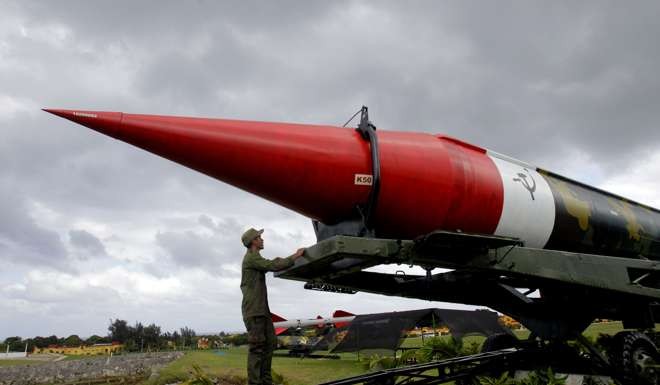
Some day, we might miss the world’s policeman
Perhaps 2016 cannot yet be compared to 1956, which saw both the Suez misadventure by Britain and France, and the Hungarian uprising against Soviet occupation. Nor to 1968, with its series of local explosions – the strikes and demonstrations which shut down France for six weeks, the Tet offensive against the US in Vietnam, the crushing of the Czech attempt to liberalise Communism.
The common theme ... was that the US remained overwhelmingly the most important actor
The Vietnam war may have been longer and bloodier than the ongoing ones in Syria and Iraq but, unlike the latter, the struggle was quite straightforward and never seriously threatened to engage China or the Soviets other than as suppliers of aid to North Vietnam.
On the economic front, the US dollar crisis of 1971, when president Richard Nixon suspended dollar-gold convertibility, disrupted world commerce for a few months as nations struggled to the Smithsonian accord of December that year. Dollar devaluations were then followed by the gradual breakdown of fixed parity arrangements and the new world of floating currencies. The 1973-74 oil price shock, when prices rose fourfold, likewise disrupted world trade and led to a new era of debtors and creditors.
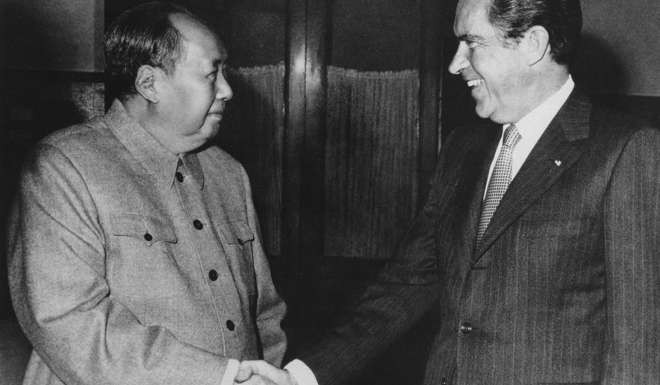
The man of the moment in the US presidential campaign is Richard Nixon
The 2008 global financial crisis showed the dangers of overleveraged banking in a world with few foreign exchange controls. But it was managed, albeit at a high price in debt and austerity for the Western countries that created it.