Don’t wait five years to ban ivory trade, Hong Kong
Hubert Cheung says the grace period, at odds with mainland China’s own timeline for a ban, will open up loopholes for exploitation and, ultimately, won’t help traders
In 1989, the Convention on International Trade in Endangered Species of Wild Fauna and Flora banned the international trade of ivory. Yet, ivory sourced before the 1989 ban can, subject to licensing and registration, still be legally bought and sold domestically in some member states, including Hong Kong and mainland China. CITES has also given special permission for one-off international sales of stockpiled ivory, once in 1999 to Japan and again in 2008 to both China and Japan.
Despite the international trade ban, the illegal poaching of elephants for their tusks has continued. Currently, monitoring data suggests that about 60 per cent of elephant deaths in Africa are attributable to poaching. Hong Kong boasts one of the world’s largest remaining ivory retail markets, and multiple reportshave documented the laundering of illegal ivory through legal retailers in the city, who are able to routinely replenish their stocks with ivory obtained through poaching due to regulatory loopholes. For its part in being a major transit conduit for ivory, the city has earned its designation as a “country of primary concern” from CITES. More than 90 per cent of purchases are made by mainland visitors, and re-export, though illegal, is common.
To address this problem, the Hong Kong government has unveiled a blueprint to phase out its domestic ivory trade. The three-step plan will start with banning the import and re-export of ivory obtained after the CITES ban, followed by prohibiting the possession of ivory sourced before the CITES ban for commercial purposes without specific possession licences. It won’t be until the end of 2021 that a complete ban on the possession of ivory for commercial purposes comes into effect.
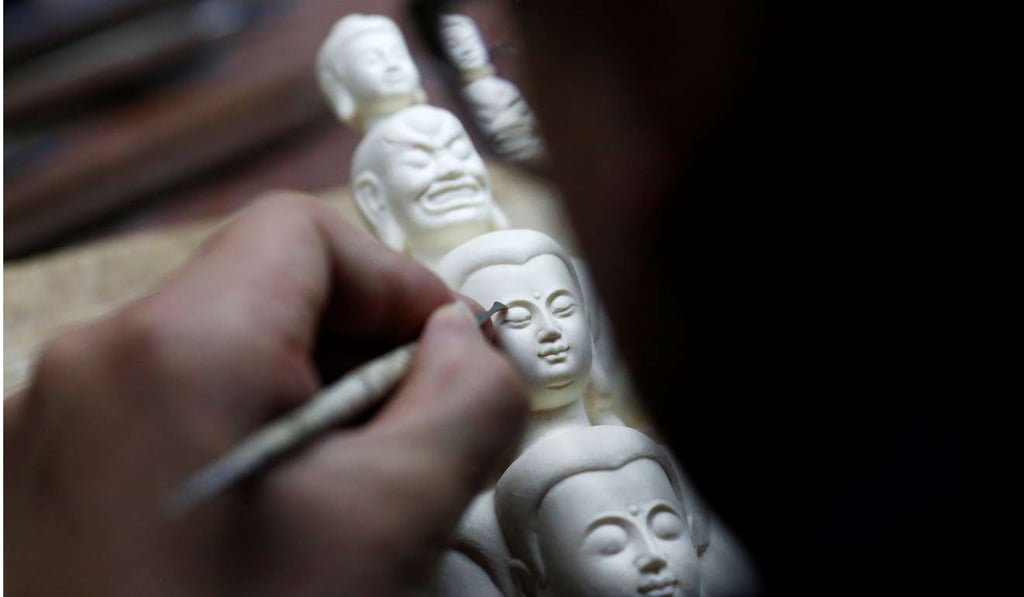
A man carves ivory at a workshop in Beijing last month. China has pledged to halt the domestic ivory trade by the end of this year. Photo: Reuters
Advertisement
Meanwhile, China has pledged to halt the domestic ivory trade by the end of this year. The difference in implementation time frames could exacerbate elephant poaching, as it leaves a four-year window for more ivory to be purchased legally in Hong Kong and then brought into the mainland. This will fuel increased sales in Hong Kong and worsen customs enforcement challenges at the city’s border points.
Whether or not a grace period is offered, the government will find it difficult to gain support from the very industry it intends to eliminate
So why have such a cumbersome and laggard implementation schedule? The Hong Kong government’s position is that giving ivory goods traders a grace period to adjust would minimise the disruption to their business. Frankly, whether or not a five-year grace period is offered, the government will find it difficult to gain support from the very industry it intends to eliminate. Any consolation and appeasement would only be token – a Band-Aid on a bullet wound – yet come at the expense of more elephants poached in the meantime.