Hong Kong’s Lion Rock spirit is being eroded by its toxic, localised politics
Andrew Sheng says an increasingly inward-looking trend is holding back Hong Kong and, unless a wider social consensus is found, it risks being left behind by rising mainland rivals

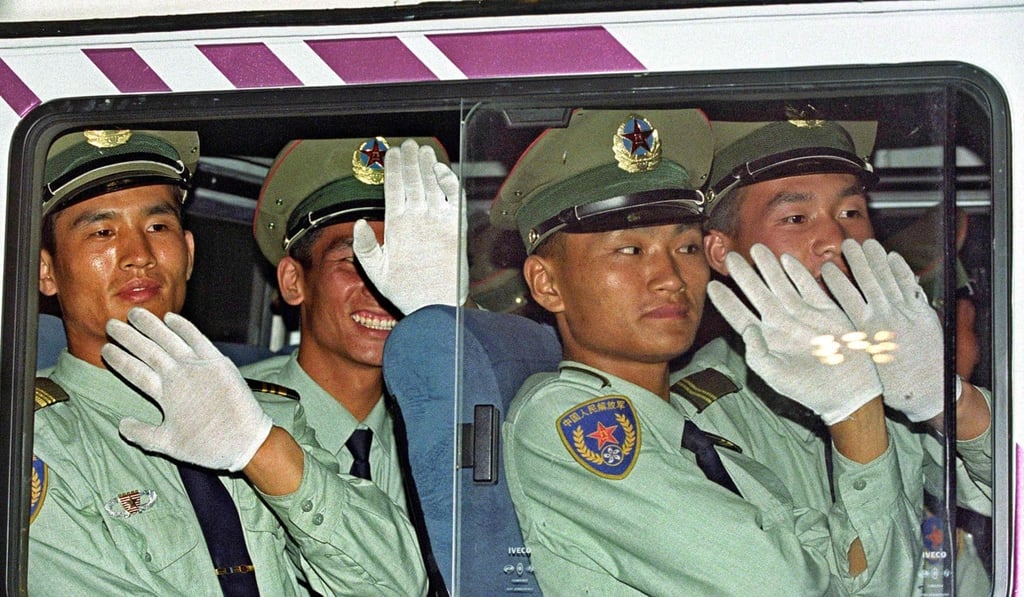
Was it only 20 years ago that we were at the Convention Centre celebrating the return of Hong Kong to China? As a white-gloved PLA soldier unfurled the flag to signal the creation of the Hong Kong Special Administrative Region on July 1, 1997, I recall wondering what Deng Xiaoping (鄧小平) would have thought had he been alive to witness it. What did it mean to have “one country, two systems” where Hong Kong residents could still “dance and race as before”, at least for 50 years?
Fast forward 20 years and, after two financial crises, the world has changed beyond imagination. Hong Kong is still rated as the most competitive and free economy in the world, but this standing is under threat, as other nations and cities begin to overtake it in innovation and technological skills.
Economically, Hong Kong has visibly prospered, its GDP has gone up by 80 per cent since 1997, building on its superior infrastructure, a free port and low-tax regime, and world-class financial and logistic hubs. But meanwhile, China has grown spectacularly, its GDP increasing 11-fold to US$11.2 trillion last year. It is now the world’s second-largest economy and leading trading nation.
Financially, Hong Kong has done well, with the market capitalisation of its stock exchange rising 7.7 times to US$3.2 trillion, but much of it was propelled by the listing of mainland Chinese enterprises. Red-chip and H-share listings have gone from 16 per cent of total main board market cap in 1997 to 40 per cent.
In comparison, the market cap of the mainland stock market, just half of Hong Kong’s in 1997, grew 34 times to reach US$7.3 trillion in value in 2016. What is remarkable is that Shenzhen (just rice fields only 40 years ago) has a stock market valuation of US$3.2 trillion – seventh in the world and one rank above the Hong Kong exchange.