Uber saga shows Hong Kong lawmakers need to get in step with the age of innovation
David S. Lee says Hong Kong’s sometimes myopic regulatory regime, amid the digital transformation of industries and rise of artificial intelligence, is hurting the city’s development as a vibrant start-up hub

The Uber saga is representative of structural flaws in both the enforcement and regulatory regimes in Hong Kong. Such defects raise broader ethical and economic issues that must be considered by those desiring a more innovative, fairer and economically competitive city.
In Hong Kong, deterrence effect is often limited because of who is targeted
A partial answer lies in the fact that deterrence is the main purpose of punishment for many Hong Kong laws. This is not unique, being a well-established purpose in many legal regimes. But, in Hong Kong, that deterrence effect is often limited because of who is targeted.
For example, when police arrest a foreign domestic worker for working illegally, say at a restaurant, that person is usually subject to detention and then deportation, while the restaurant normally faces minimal punishment, if any. As a result, the restaurant is likely to keep employing illegal workers. It is clear that enforcement against both the restaurant and the worker would possibly offer more comprehensive deterrence.
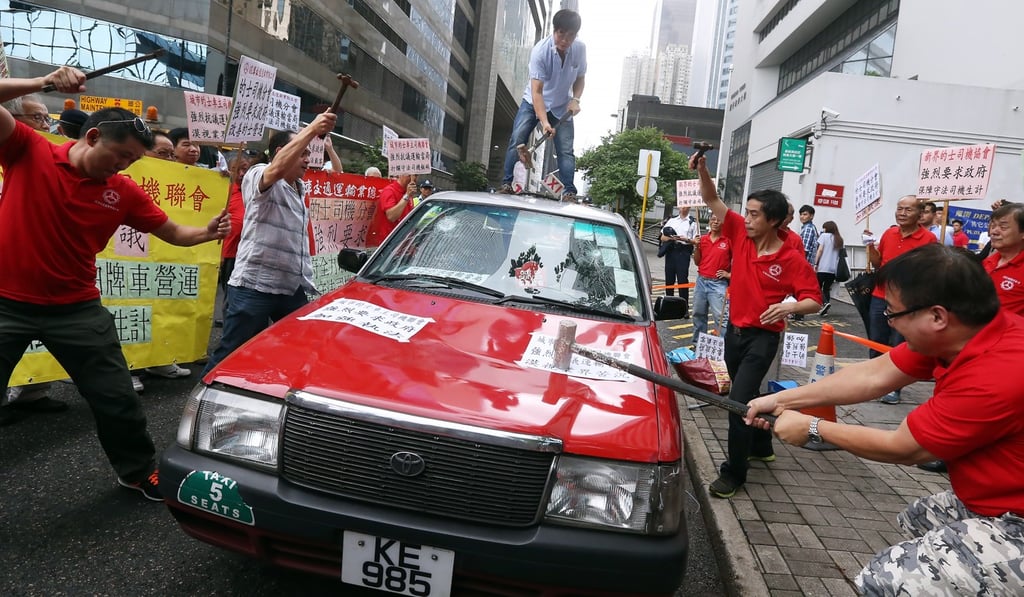
Applying the above to Uber, more effective deterrence would not focus enforcement solely on drivers but also on Uber’s Hong Kong entity. Of course, the pro-business nature of Hong Kong’s laws and how they are enforced can make this difficult in practice. Indeed, Hong Kong is one of the few jurisdictions in the world that allocates voting power to corporate voters through functional constituencies.
There seems to be a sense of half-heartedness when it comes to banning ride-sharing services