Advertisement
China-India border dispute
Opinion

Xi and Modi must lean on diplomacy amid Doklam border flare-up

Neeta Lal says the latest Himalayan stand-off crowns a rough patch in China-India ties, compounded by Delhi’s attempts to boost military ties with the US, but hopes are that diplomacy, and reason, will prevail

4-MIN READ4-MIN
Activists of a Hindu right-wing organisation protest against China’s decision to block Indian pilgrims from Nathu La Pass following tensions in Doklam, on July 4. Photo: AFP
Neeta Lal

As Indian prime Minister Narendra Modi and Chinese President Xi Jinping ( 習近平 ) prepare to cross paths at the G20 summit in Hamburg, the optics back home are not too good.

China and India have been locked in a bitter face-off since early June along the strategic 269 sq km Doklam plateau in Bhutan, that is claimed by China, over road construction by the People’s Liberation Army. The narrow plateau is where Tibet meets Bhutan and the Indian state of Sikkim.
India opposes the road-building, and has positioned troops close to the tri-junction, as it feels China’s actions violate a 2012 Sino-Indianagreement. China has harshly denounced Delhi for violating Chinese sovereignty through “illegal trespass” by the Indian army into the plateau to halt the construction as well as “obstruct[ing] Chinese border troops’ normal activities”.

China calls border row with India ‘the worst in 30 years’ as both sides dig in heels

Beijing has also blocked access to Indian pilgrims, headed for the Tibetan region holy sites of Kailash and Mansarovar through the Nathu La pass from Sikkim, until India unconditionally withdraws forces from Doklam. The state-run Global Times also ominously reminded India that the latter “cannot afford a showdown with China on border issues” because it “lags far behind China in terms of national strength” and “the so-called strategic support for it from the US is superficial”.
Advertisement
The stand-off has triggered one of the worst crises in bilateral relations since a flare-up along the 4,057 km Line of Actual Control in Ladakh in 2013.
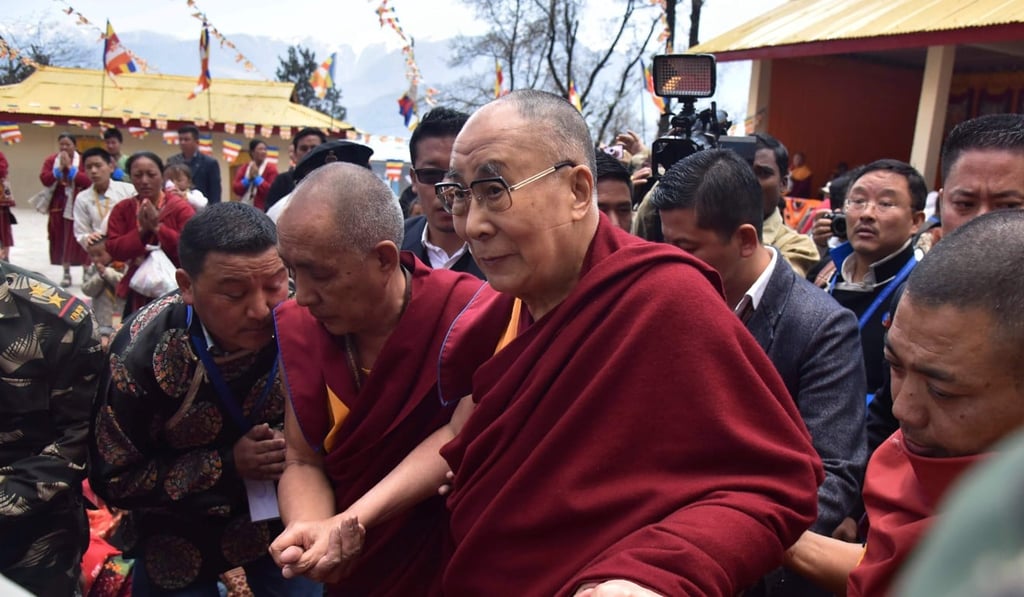
Exiled Tibetan spiritual leader the Dalai Lama arrives at a monastery in the district of Tawang in India's northeastern state of Arunachal Pradesh on April 9. The visit angered China, which claims the state as its territory. Photo: AFP

Why China, India and the Dalai Lama are pushing the boundaries in Tawang

The Global Times urged Beijing to “teach New Delhi a bitter lesson”, stronger than the brief but bitter war of 1962, which India lost.

Advertisement
Select Voice
Select Speed
1.00x