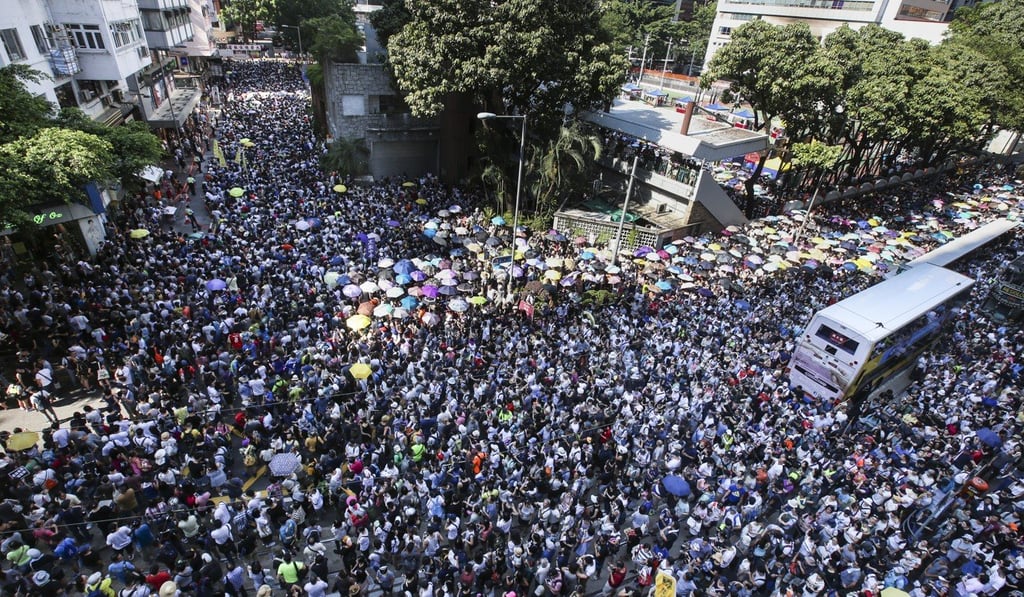
With Hong Kong’s young faces of democracy in jail, is civil society being put in chains?
Michael Davis says the political symbolism of locking up young activists over excessive zeal is telling, and the lack of prosecutorial restraint may put at risk the reputation of Hong Kong’s independent judiciary

One can only wonder what the Department of Justice was thinking in pushing the courts to lock up so far 16 of Hong Kong’s dedicated young men and women, over moments of excessive zeal. Is Hong Kong on its way to joining other unsavoury regimes in filling its jails with political prisoners, as the international response suggests? Would prosecutorial restraint have been warranted?
Watch: Hong Kong’s student leaders jailed
To understand the importance of such risk, it is important to know how the Hong Kong political system works. The “one country, two systems” model under the Sino-British Joint Declaration provided Hong Kong with an open rule-of-law-based society, but without the democratic constitutional tools to defend it.
One can only wonder what sort of Hong Kong we would have without pushback from civil society
This open autonomous region is lodged under a hardline regime with a strong political ethic of control as a fundamental principle of national security. This regime in its normal practice shows little inclination to exercise restraint.
The executive and legislative branches of the local “autonomous” government are effectively under the appointment and control of the central government, in a largely authoritarian system.
Rather, the incentives favour a well-developed tendency to lecture Hong Kong on Beijing’s concerns.