Advertisement
HK handover 20th anniversary
Opinion

If Chris Patten truly cares for Hong Kong, he should fight for equal rights for British National (Overseas) passport holders

Albert Cheng says the BN(O) passport is a grievous wound inflicted by the British government, a betrayal of the people of Hong Kong. The test of the former governor’s fine words will be whether he can help right that wrong

3-MIN READ3-MIN
Chris Patten with pan-democrats Emily Lau and Alan Leong Kah-kit, ahead of a lunch hosted by the Hong Kong Democratic Foundation, in Central on September 20. Photo: Edward Wong
Albert Cheng
Hong Kong’s last governor, Chris Patten, was recently in town to promote his new book, First Confession. Patten is a charming, energetic and experienced politician, and his polished speeches hold great fascination for his audience. This time, he praised Chief Executive Carrie Lam Cheng Yuet-ngor for doing a better job than Leung Chun-ying, and eulogised the new generation for adhering to their principles.
Patten’s pertinent comments on Hong Kong’s political environment have won him worldwide applause. However, at a lunch organised by the Hong Kong Democratic Foundation, Patten seemed rather baffled by an issue raised by veteran democrat Emily Lau Wai-hing. She asked if Patten, a member of the House of Lords, would raise in Parliament the issue of giving the right of abode to British National (Overseas) passport holders. Patten promised to raise the matter when the issue of whether to count foreign students in the government’s immigration target was tabled again, but also reminded Lau not to overestimate the influence of the upper chamber. The underlying message was that there was nothing he could do.

How far should Britain go to ensure Joint Declaration promises are kept for Hong Kong?

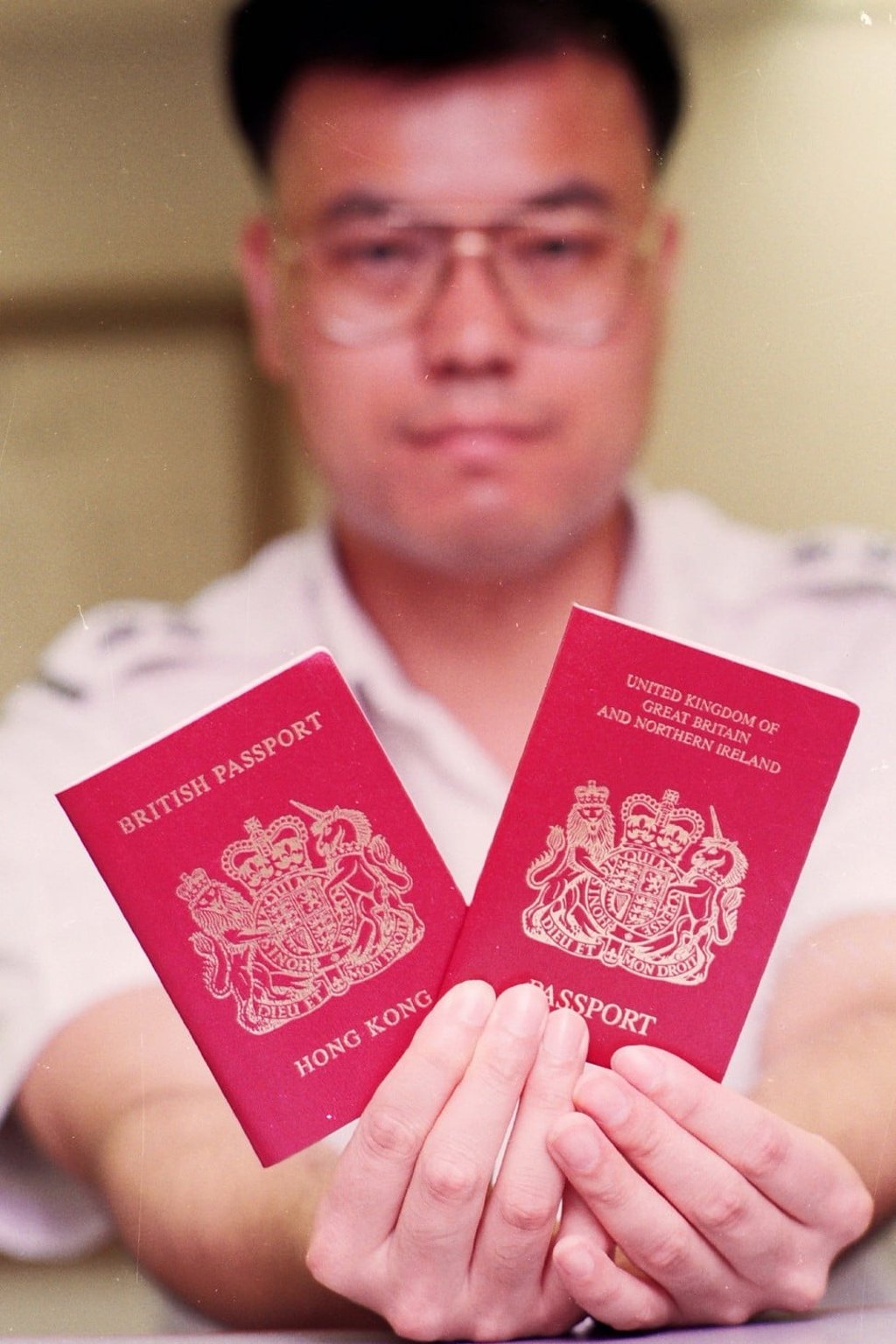
The BN(O) issue has inflicted a long-lasting and grievous wound on the Hong Kong people. Originally, there were about 3 million British Dependent Territories Citizen (BDTC) passport holders (including people born before July 1, 1997 in Hong Kong, and naturalised British subjects). However, due the handover, the British government amended its constitution, changing the BDTC classification to BN(O), who do not have the right of abode in the UK.
Advertisement
A Hong Kong immigration officer holds up British National Overseas (left) and British Dependent Territories Citizen passports, in June 1993. Photo: SCMP Pictures

Britain debates citizenship for BN (O) holders

The British government went back on its word and betrayed the Hong Kong people. In fact, after the June 4 incident in 1989, due to strong community pressure, it reluctantly granted 50,000 right of abode places for Hong Kong families. But people instead flocked to emigrate to the US, Canada, Australia, New Zealand, Singapore, and so on. The arrogant attitude of the UK government caused an apathetic response to the “right of abode” scheme and it ended up being underutilised.

Advertisement
Advertisement
Select Voice
Select Speed
1.00x