Advertisement
Capitalism’s first three phases served the rich: will Industry 4.0 do the same?
Andrew Sheng says the new wave of industrial innovation may use more advanced technology than the digital revolution, but it needs a new development model to avoid falling into the same traps
3-MIN READ3-MIN

As we go through the fog of modernity, confused by threats of war, toxic politics, terrorism, tech-led job disruption, and natural and human disasters, what is the right development model going forward?
In the post-war period, development was defined by the Bretton Woods multilateral institutions framework, comprising the International Monetary Fund, World Bank and World Trade Organisation. As long as developing countries played by global rules, opening to free trade and following orthodox fiscal and monetary discipline, they could join the global market and enjoy growth.
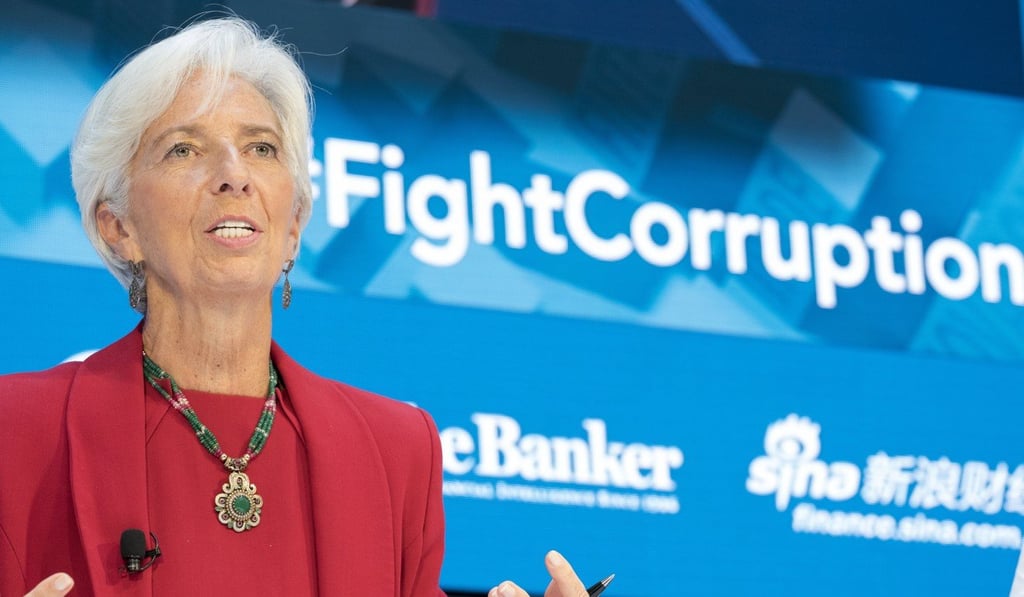
IMF says world economy growing although inequality putting pressure on society
This creed was severely tested by the Asian Financial Crisis of 1997. Asian economies open to trade and investment suddenly faced a crisis due to sharp capital withdrawals, accompanied by speculative attacks causing devaluations, bank failures and recession. It was not helped by initially wrong policy prescriptions by the IMF, whose orthodox call for tighter fiscal discipline and higher interest rates exacerbated the downturn.
Advertisement
If the period of mercantilism before the Industrial Revolution in the 18th century can be called Capitalism 1.0, and the Industrial Revolution, Capitalism 2.0, the phase from the late 19th century to 2007 can be called Capitalism 3.0. This was the period when the West pushed globalisation, first led by the British Empire (version 3.1) and then the US after the second world war (version 3.2).
China’s first global dollar bond issue in 13 years is 10 times oversubscribed
Capitalism 3.3 truly achieved globalisation through the rapid spread of markets, made obvious by China joining the WTO in 2001, creating new heights in global trade and investment. The global supply chain, of which there are two obvious wings,– between Europe and the US, and between East Asia and US/Europe – but with raw materials and components sourced from everywhere, was essentially created through technological improvements in shipping, air and land transport, telecommunications and, since 1991, the internet.
Advertisement
Advertisement
Select Voice
Select Speed
1.00x