-
Advertisement
Shinzo Abe
Opinion

Why the US is no threat to China, but a remilitarised Japan, led by Shinzo Abe, may well be

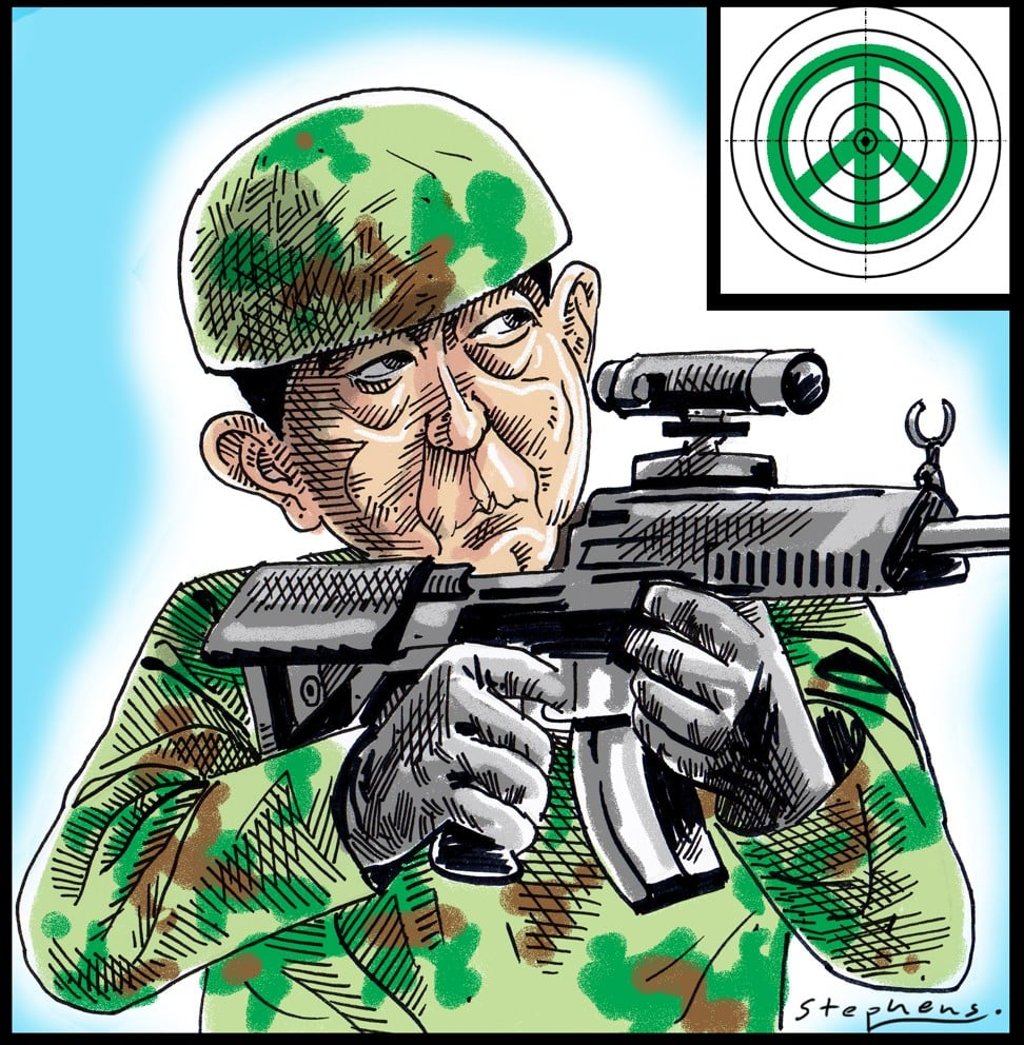
Chi Wang says a Chinese psyche still bearing the scars of the Nanking massacre has reason to feel threatened, as Prime Minister Shinzo Abe leads Japan towards remilitarisation by abolishing Article 9 of its US-influenced pacifist constitution

Reading Time:4 minutes
Why you can trust SCMP
Chi Wang says a Chinese psyche still bearing the scars of the Nanking massacre has reason to feel threatened, as Prime Minister Shinzo Abe leads Japan towards remilitarisation by abolishing Article 9 of its US-influenced pacifist constitution
Chi Wang
Never before has the Japanese military been included so openly in a prime minister’s campaign platform. Perhaps this is unsurprising, coming from Shinzo Abe. Illustration: Craig Stephens
In December 1937, Imperial Japanese Army forces marched on the city of Nanking and, over a period of six weeks, brutally murdered thousands of Chinese – soldiers and civilians alike.

It was the most violent act in modern Chinese history, with estimates of those killed ranging from 200,000 to 300,000. Never before had any foreign power killed so many Chinese civilians so systemically or so ­brutally. The attack left the city, now named Nanjing, burnt and ravaged, and struggling to recover for decades.

Although there were internal wars in China and rebellions that ­resulted in the deaths of citizens, there was never any systemic killing that compared even remotely with the depths of the Nanking massacre.

Advertisement
This year marks the 80th anniversary of the tragedy. Nanjing itself has grown into a modern city, but the memory of 1937 still lingers in the Chinese consciousness, especially for those of us who lived through the Japanese occupation.

We remember the widespread reach of the Japanese military and its colonial grip on Asia. Japan’s ­expansionism led it across East Asia, with a foothold in almost every corner of the region until the US forced its surrender. It was the US that then looked after China and ­ensured its protection from Japan.

Japan hotel chain under fire for CEO’s book that denies Nanjing massacre
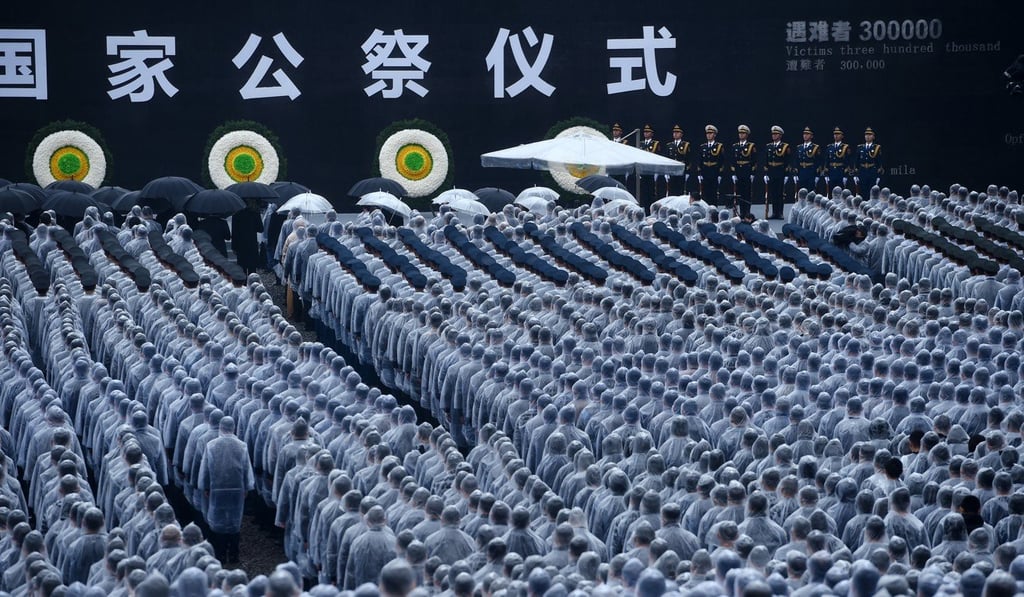
A state memorial ceremony for the Nanking massacre at a monument to the victims, in the city in east China’s Jiangsu province, last December 13. The figure in the top right corner is the estimated number of Chinese killed by the Japanese occupation forces. Photo: Xinhua
Advertisement
Select Voice
Choose your listening speed
Get through articles 2x faster
1.25x
250 WPM
Slow
Average
Fast
1.25x