Advertisement
North Korea nuclear crisis
Opinion

Why all the US hot air on a nuclear North Korea is counterproductive

Doug Bandow says the US can’t halt North Korea’s nuclear programme without risking a catastrophic war and should stick with the containment and deterrence strategies that have worked for the past seven decades instead

Reading Time:2 minutes
Why you can trust SCMP
North Korean leader Kim Jong-un watches a launch drill of the strategic ballistic rocket Hwasong-12 in a photo released by Korean Central News in September 2017. Photo: KCNA via AFP
Doug Bandow
When asked why it is not possible to deter North Korea, a military midget compared to Stalin’s Soviet Union and Mao’s China, US Secretary of State Rex Tillerson responded: “The difference is that with the past behaviour of North Korea, it is clear to us that they would not just use the possession of nuclear weapons as a deterrent. This would become a commercial activity for them.”

In fact, Pyongyang’s past behaviour proves no such thing. Selling conventional weapons is not the same as marketing nuclear technology; dealing with governments is different from supplying non-state actors. Selling nuclear materials is less likely when major powers target such behaviour. Moreover, North Korea’s record is no worse than that of the Soviet Union and China.

North Korea exposed: everyday life in world’s most reclusive nation

If Pyongyang is inclined to further proliferate, why hasn’t it done so? Kim Jong-un apparently recognises that some actions would be too dangerous to justify even a generous pay-off.
Advertisement

If the US administration fears nuclear sales so much, its emphasis on sanctions is counterproductive. Stepping on the North’s economic windpipe forces the Kim regime to take desperate steps to breathe. Pursue negotiations which leave North Korea a less dangerous way to raise revenue, and it would probably choose that path.
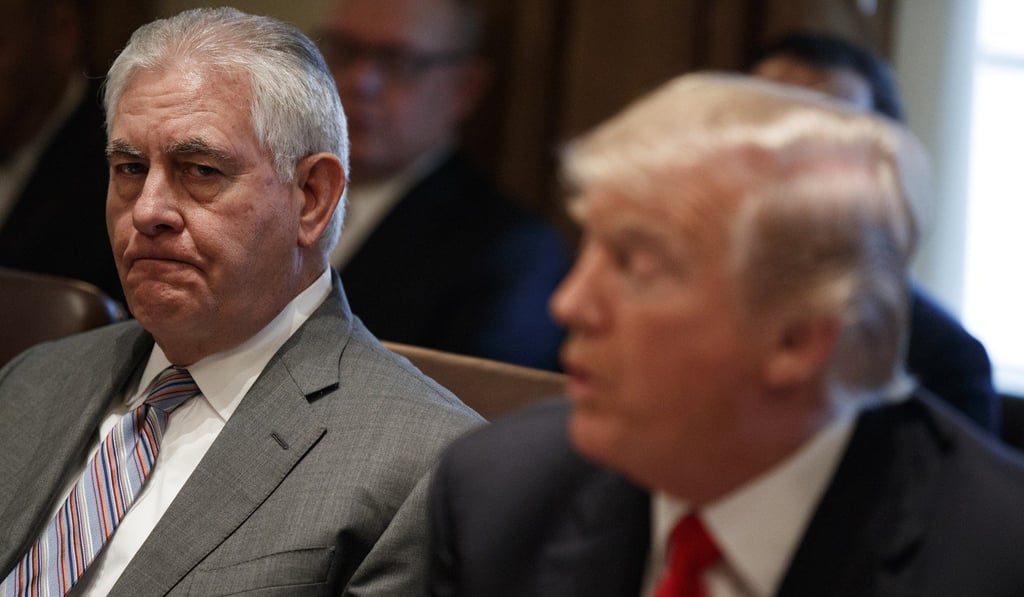
US Secretary of State Rex Tillerson (left) listens to US President Donald Trump speak during a cabinet meeting at the White House on January 10. Photo: AP
Advertisement
Tillerson’s comments look particularly odd given the US response to Pakistan’s promiscuous proliferation, from which Iran, Libya and North Korea are thought to have benefited. The George W. Bush administration seemed more concerned over Pakistan supporting the Taliban than opening an international Nukes-R-Us. Although Islamabad ended the illicit commerce, the US might still worry more about an unstable Pakistan than North Korea.
Advertisement
Select Voice
Choose your listening speed
Get through articles 2x faster
1.25x
250 WPM
Slow
Average
Fast
1.25x