Advertisement
Anti-mainland China sentiments
Opinion
Peter Kammerer

Opinion | In Hong Kong, animosity towards mainland Chinese can’t be overcome without an open mind

Peter Kammerer says the fear of mainlandisation, though understandable, unfortunately stops Hongkongers from getting to better understand the mainland Chinese who come for work or a holiday. The continuing spats show not enough Hongkongers are making the effort

Reading Time:3 minutes
Why you can trust SCMP
Tourists take photos of the Symphony of Lights show on Hong Kong Island from the Tsim Sha Tsui harbourfront, in May last year. Over 70 per cent of Hong Kong’s visitors come from the mainland. Taking the time to start a conversation with a stranger from the mainland by talking about how their trip is going will make a world of difference to mainland-Hong Kong relations. Photo: Dickson Lee
How many more times are we going to be pummelled by yet another sorry tale of Hongkongers and mainlanders sniping at one another? To add to the long and sorry list of recent years, in the past week, we’ve had a row over Mandarin language exams at Baptist University and a food fight in a noodle shop at the airport. I also witnessed an argument on a bus and jostling on a street in Causeway Bay.

None of these would have happened had those involved treated each other as equals and taken the time to talk rather than shout.

The Baptist University saga is complex, but at its heart is that same old concern about the creeping mainlandisation of Hong Kong. There are fewer layers to the noodle shop incident, which involved staff losing their cool with two mainland travellers. Both matters quickly found their way onto social media platforms, where the usual mud-slinging ensued. The latter has been settled with an apology from the shop, but the former rumbles on.

Watch: Hundreds protest against the suspension of two students in Mandarin row

Hong Kong students the real losers in language battle

Hongkongers feel threatened; I get that. I understand how nationalism is created and manipulated so that the mere suggestion of words like “independence” can have sycophants howling. But there’s also another truth, best illustrated by an observation; two decades ago, people on the mainland complained that Hong Kong visitors were noisy and arrogant, and now the reverse is true. As an outsider to the dispute, I don’t perceive either side is worse and the only significant change is that Hong Kong now gets many times more mainland visitors.
Advertisement
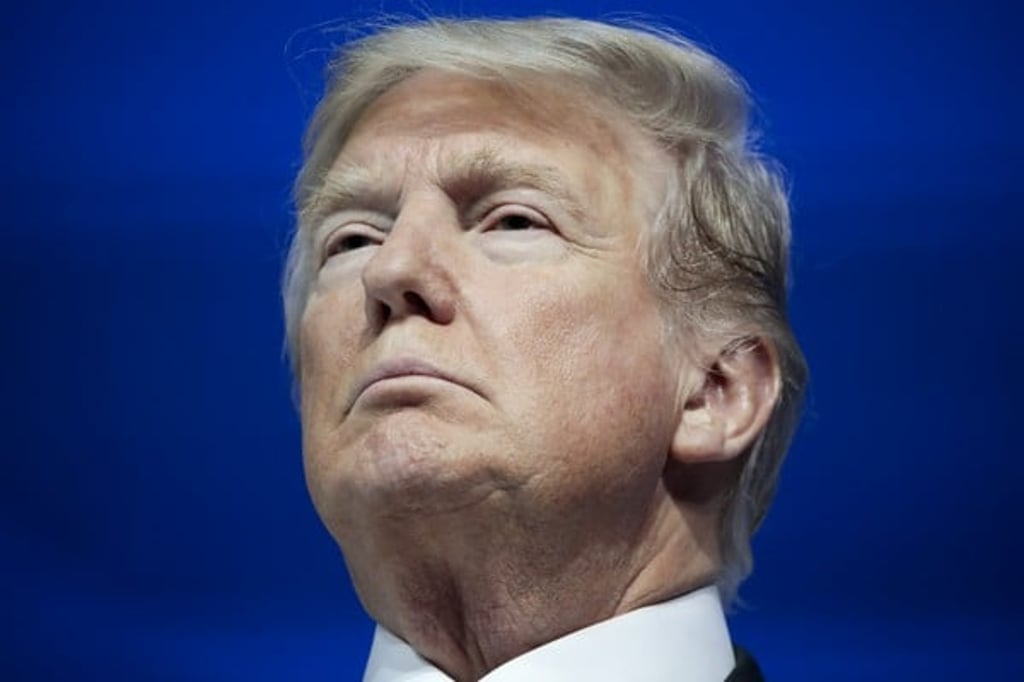
US President Donald Trump may be a buffoon, but that does not make all Americans clowns. Photo: Bloomberg
Keep in mind that we’re talking about the same ethnic group and their biggest differences are the dialect they speak and, marginally, the manner in which they’re governed. Culturally, there’s no difference, with both celebrating the moon, with festivals featuring mooncakes and red packets containing money. Not liking the manner in which a person or political party governs can never be a reason to also dislike the people who are subject to such a system. I think United States President Donald Trump is a buffoon, but I would be foolish to suggest all Americans are also clowns.
Advertisement

There’s bound to be indignation when shopping and leisure habits are disrupted by a tourist influx. But Hong Kong has had plenty of time to adjust to that. We should also have had every opportunity to get to better know and understand our visitors. Unfortunately, it’s obvious from the continuing animosity that not enough have tried.

Advertisement
Select Voice
Choose your listening speed
Get through articles 2x faster
1.25x
250 WPM
Slow
Average
Fast
1.25x